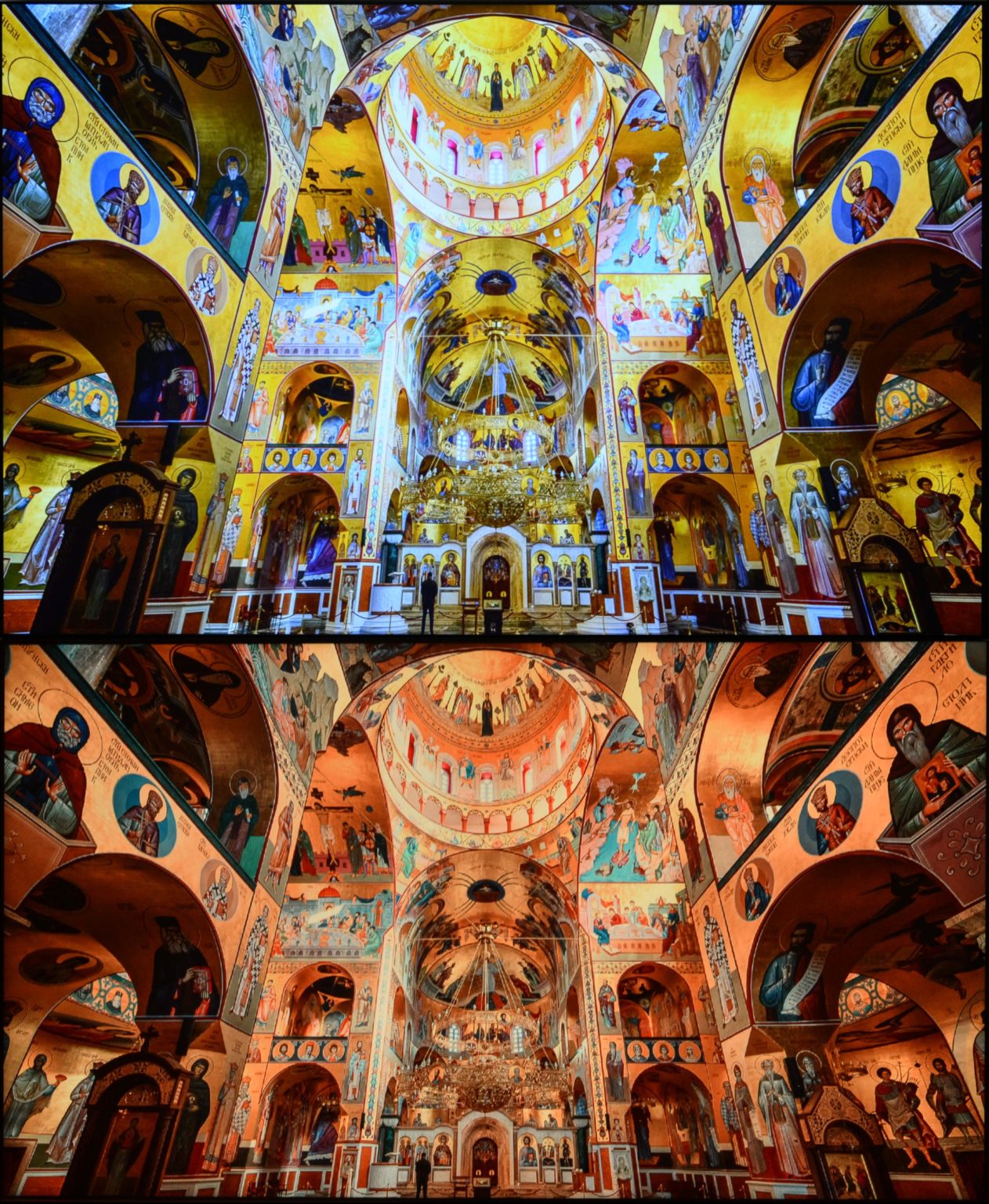
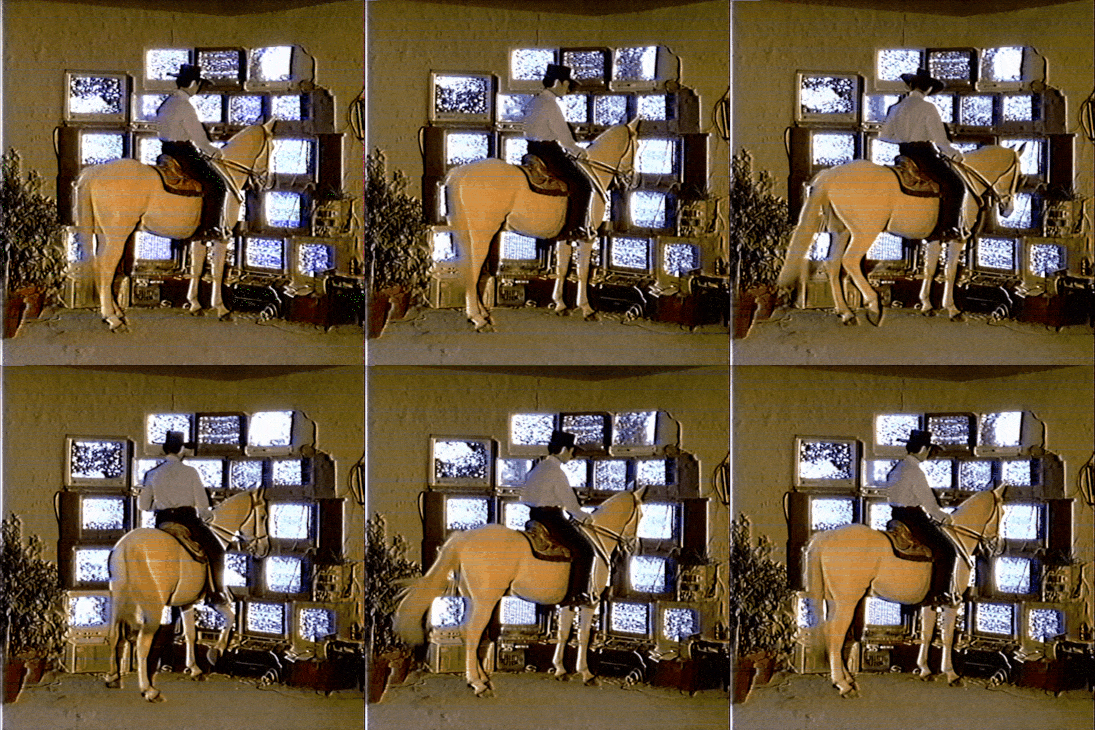
Although the nature of light is apparent to our eyes, it is also so obscure that no complete description has been given.
“That which comes from the wisdom of the Light of the Holy Ghost is of only one specie…but that which comes from the Light of Nature is of two species…”
–Theophrastus Paracelsus (1493–1541)
Light has been a source of wonder and mystery since antiquity, we do not actually see light, only the source and its reflection, as light itself is invisible. When we look at a source of light, we see the photon creation mechanism in action. And there are only two fundamental creation mechanisms, either through incandescence, produced by thermal vibration, also called hot light. and luminescence, light is produced through other than thermal mechanisms, also called cold light.
Natural incandescence comes the Sun and all the celestial bodies.
Artificial incandescence comes from fire.
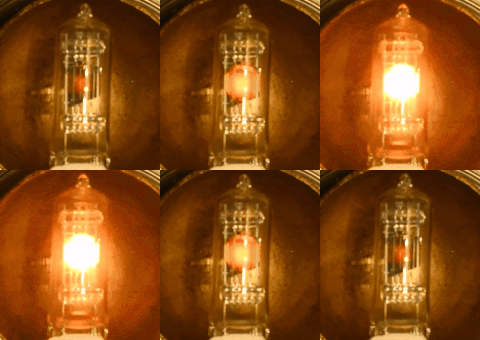
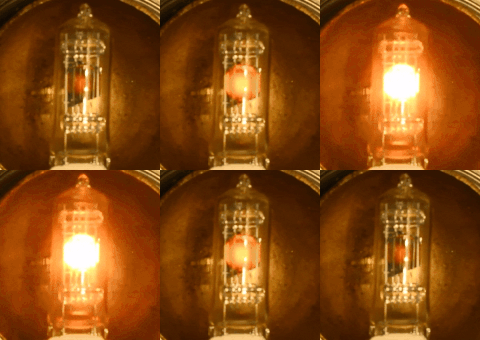
Artificial incandescence also comes from incandescent bulbs.
Artificial luminescence comes from fluorescent bulbs.
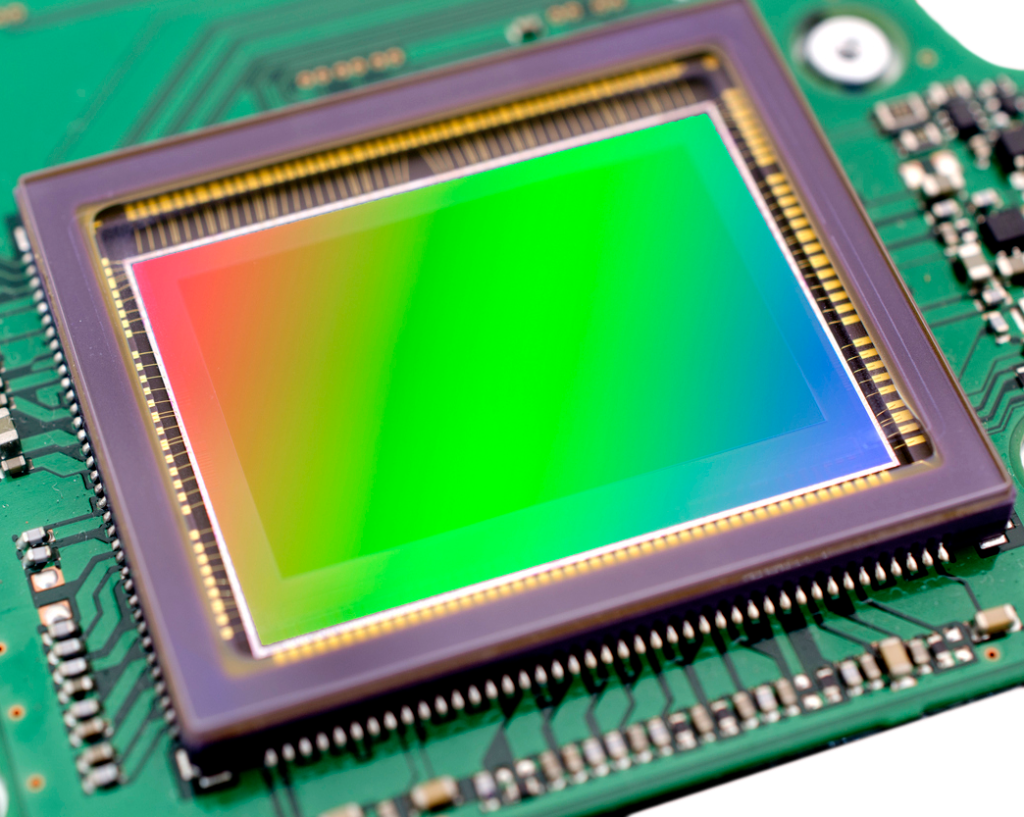
Artificial luminescence also comes from light emitting semiconductors.
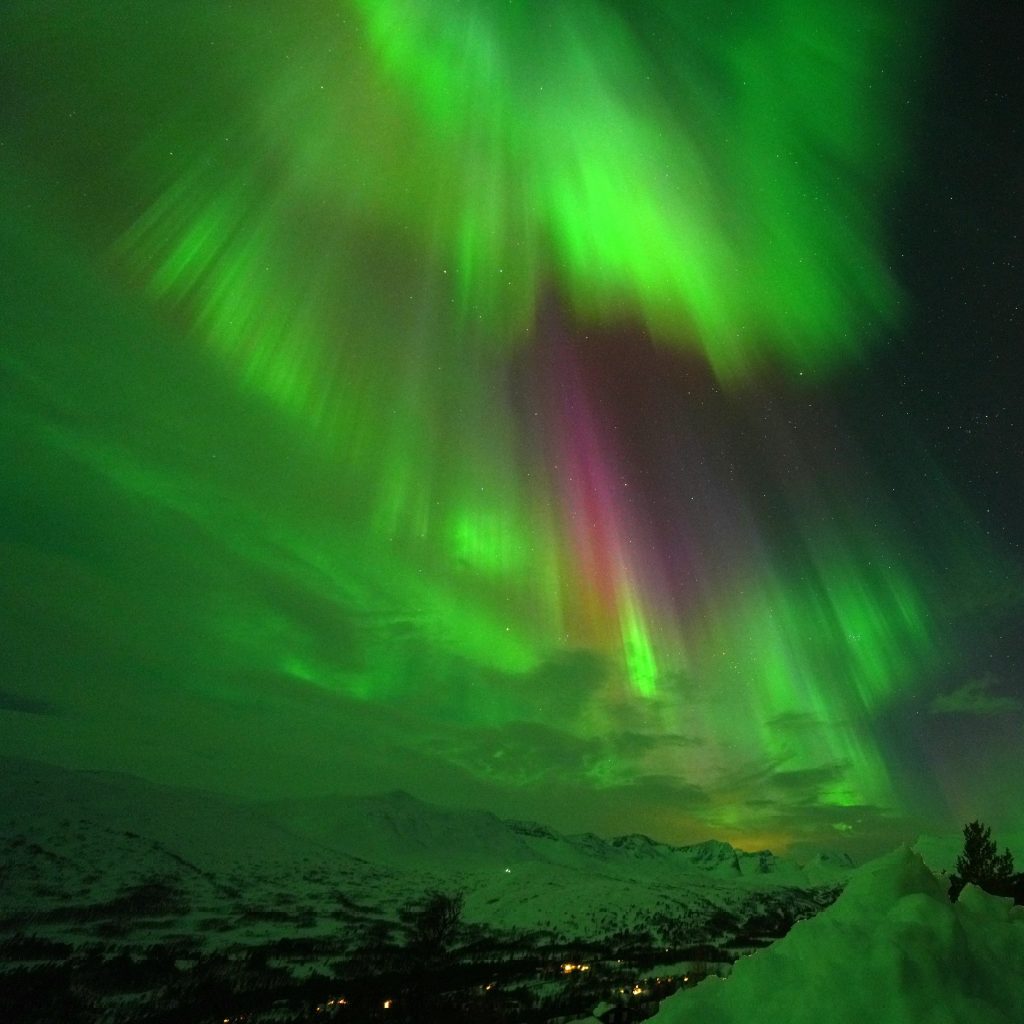
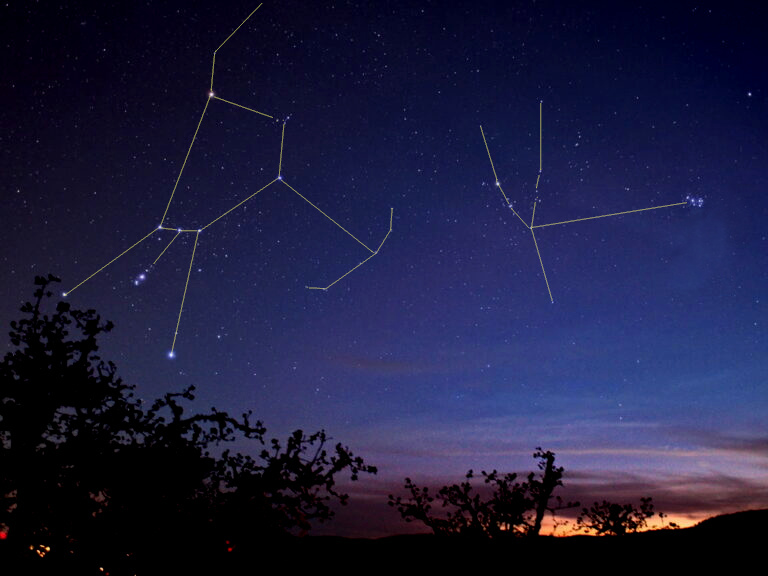
Natural luminescence comes from northern lights.
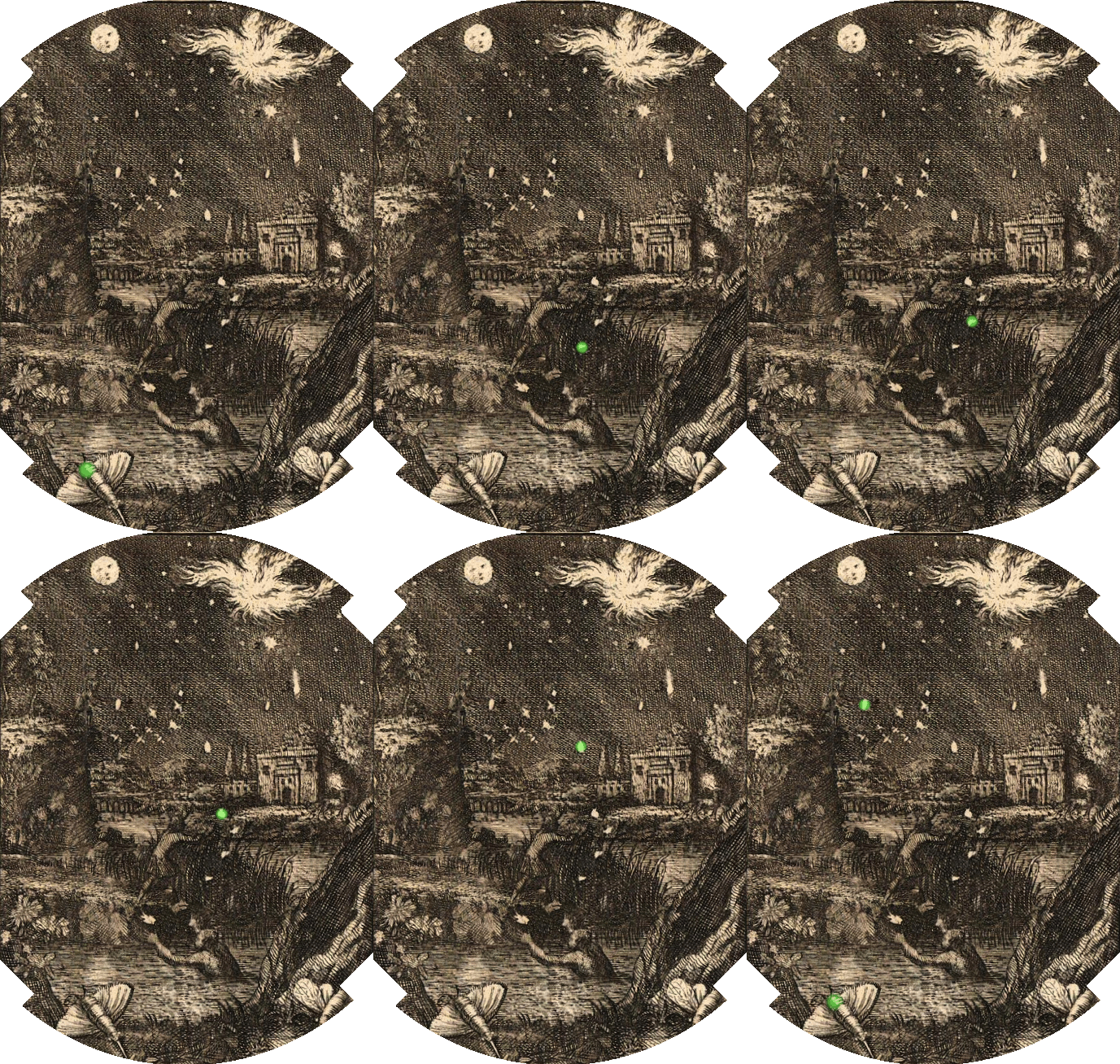
Natural luminescence also comes from the bio-luminescent properties of some noctiluca insects and other creatures like angler fish and will-o’-the-wisps.
“And created jinn from a smokeless flame of fire.”
–Surah 55:15
Since the dawn of mankind we have seen mostly incandescent sources of light, the arrival of electricity revolutionized culture and technology, but the first electric light source was still incandescent. It was the electro-luminescent light that marked the real change in our lighting, and today we are mostly surrounded by it, especially from the interface to our modern day tool, the computer.²
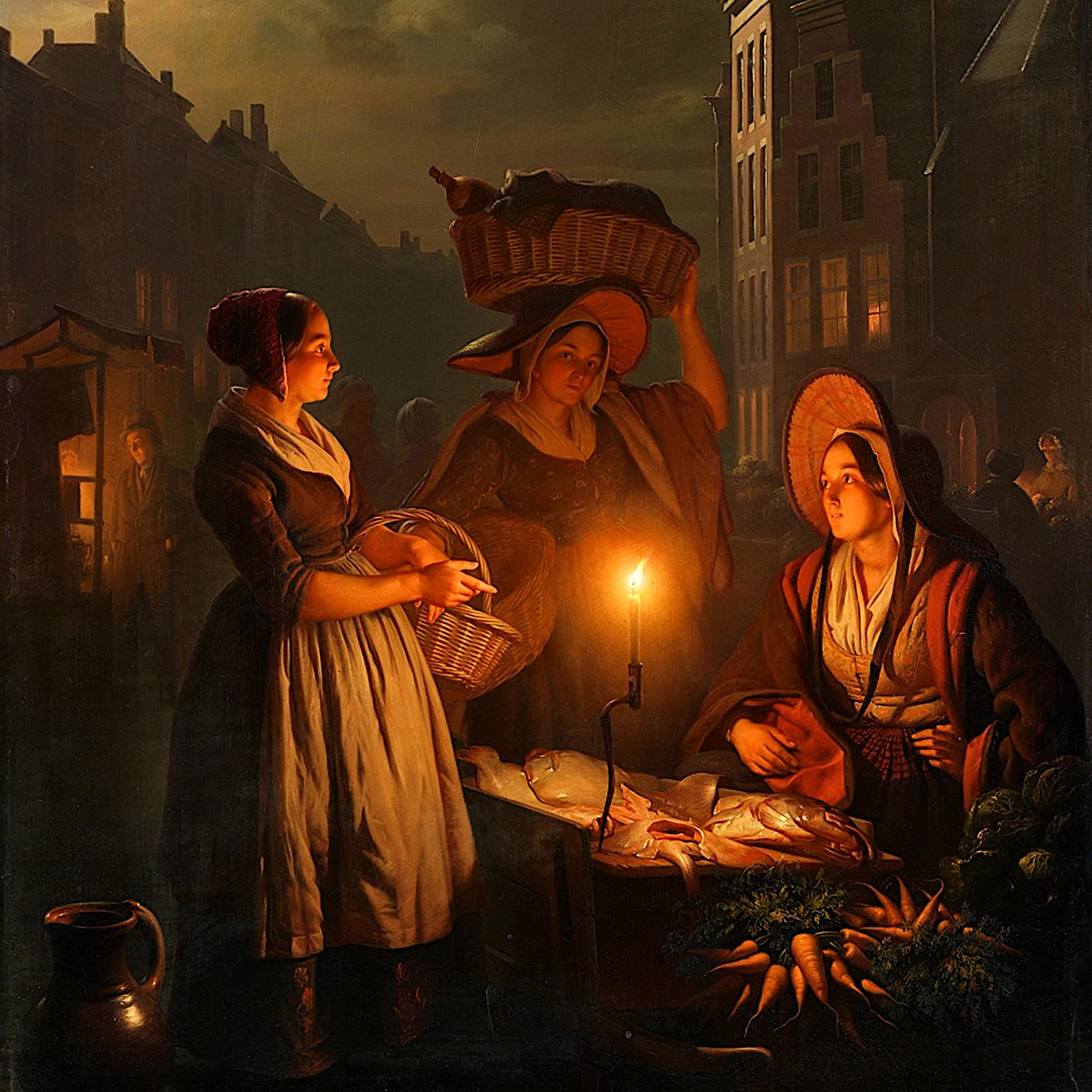
“Market by Candlelight.” Petrus van Schendel, 1869.
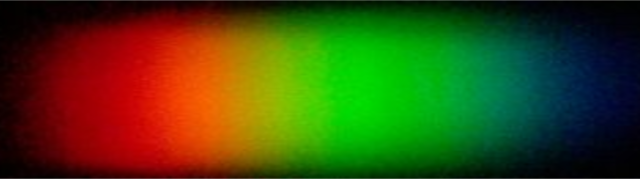
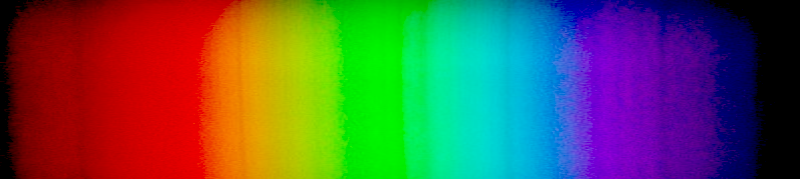
Candlelight spectrum.
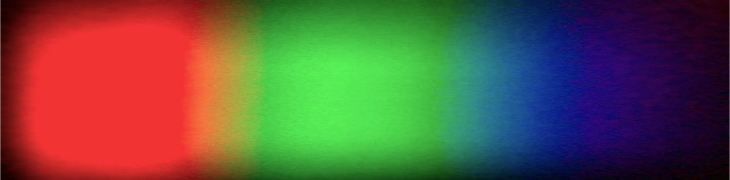
Electro-luminescent spectrum.
“99 Cent.” Andreas Gursky, 1999.
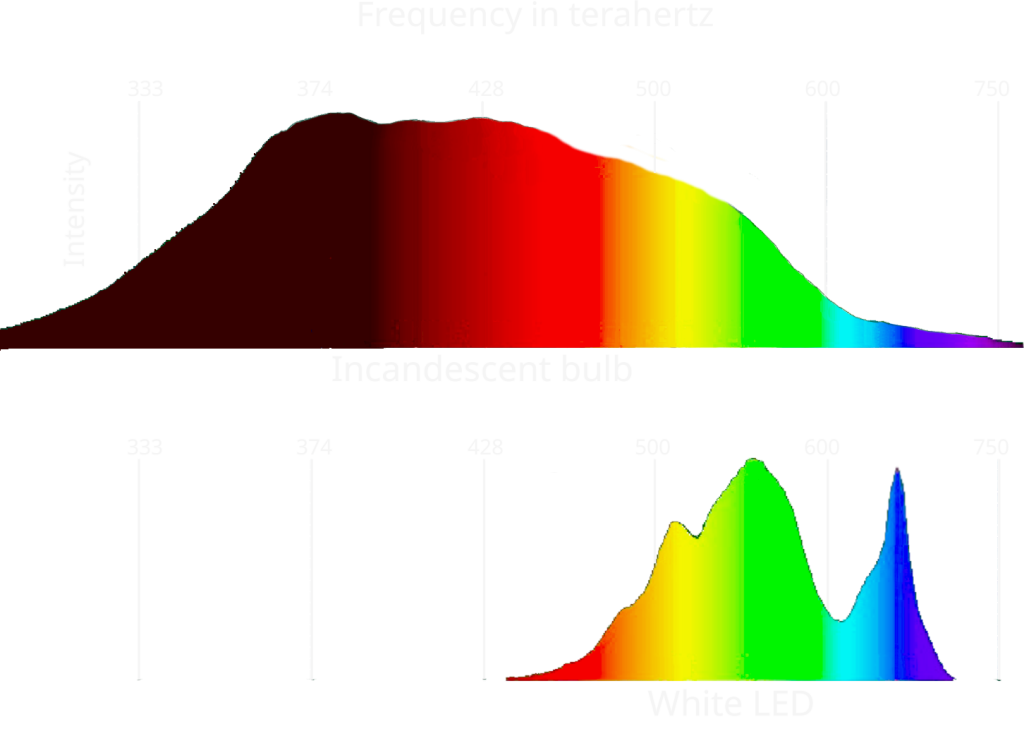
A candle and a fluorescent tube both create light, but they do not create the same world around them. Luminescent light has inherently a discontinuous narrow-band spectra while incandescent light has inherently a continuous broad-band spectra. Both are useful for different things, and excel in their specific applications, for example incandescence is unmatched for highest fidelity chromatic rendering. Something luminescence can’t compete with because it has real spectral voids, where there is literally no light present. However, luminescence is unmatched for digital information transmission, as it lacks thermal inertia, and incandescence has thermal inertia.
“The Glory of Saint Augustine.” Philippe de Champaigne, 1645.
Incandescent photons are born from the acceleration of energy and entropy through classical mechanics.
“Light is the principal person in a painting.“
– Edouard Manet
Luminescent photons are born from a drop in energy and entropy through quantum mechanics.
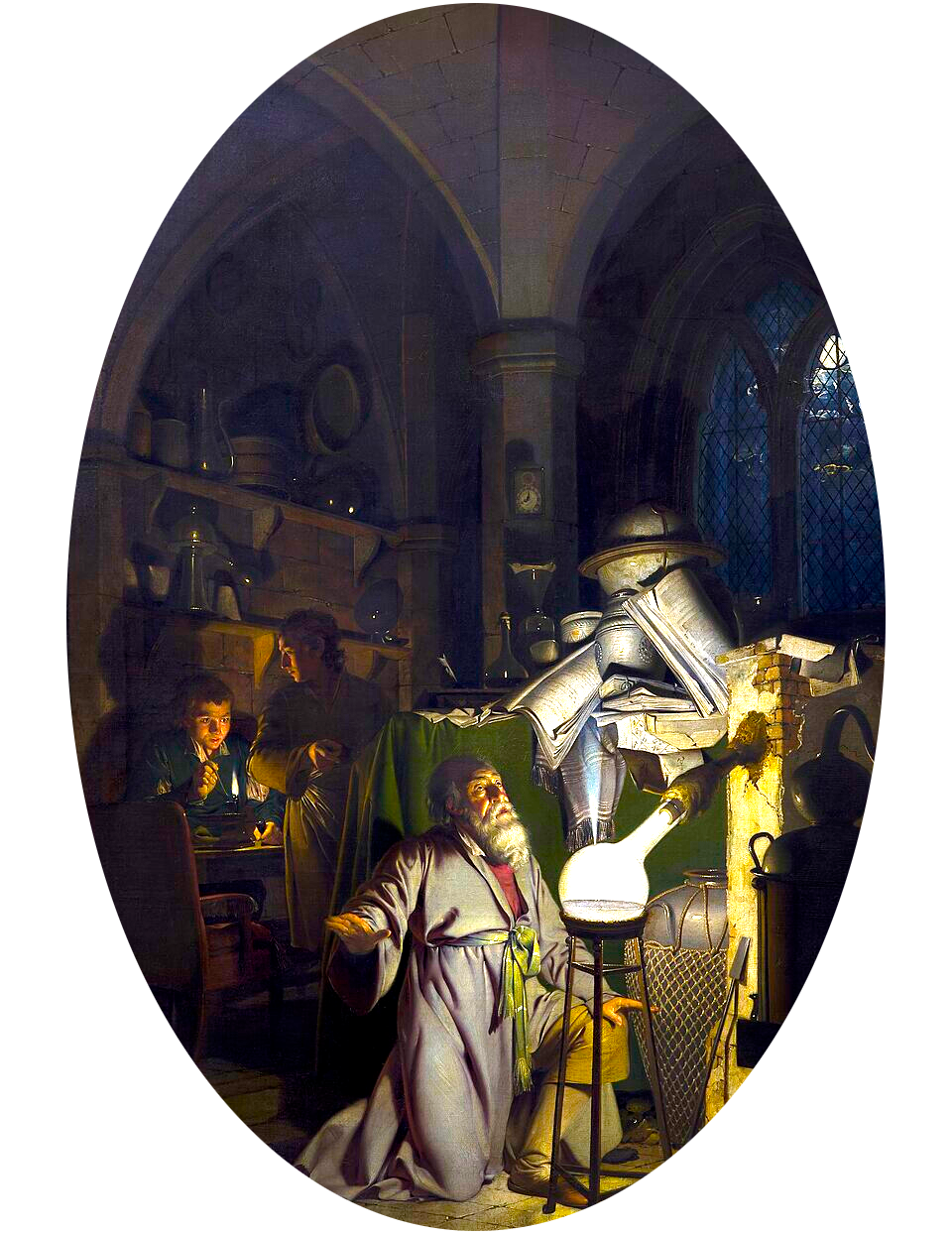
“The Alchemist Discovering Phosphorus.” Joseph Wright of Derby, 1771.
Paradoxically, the most efficient mechanism to produce light in the universe is through incandescence, as it produces more total photon flux (lux) from the same amount of energy than luminescence. However much of this light is in the infrared spectrum which is not visible to our eyes, so it appears as if it produces less light, but this is only because we can’t see it, not because it doesn’t exist. Luminescence has the ability to produce only certain spectral bands, so it appears to be more efficient, but this is only partly true. Both kinds of light are very useful in their unique applications and both have their special unique properties. However, it is important to understand that something with wholeness will always cost more than something incomplete. ¹
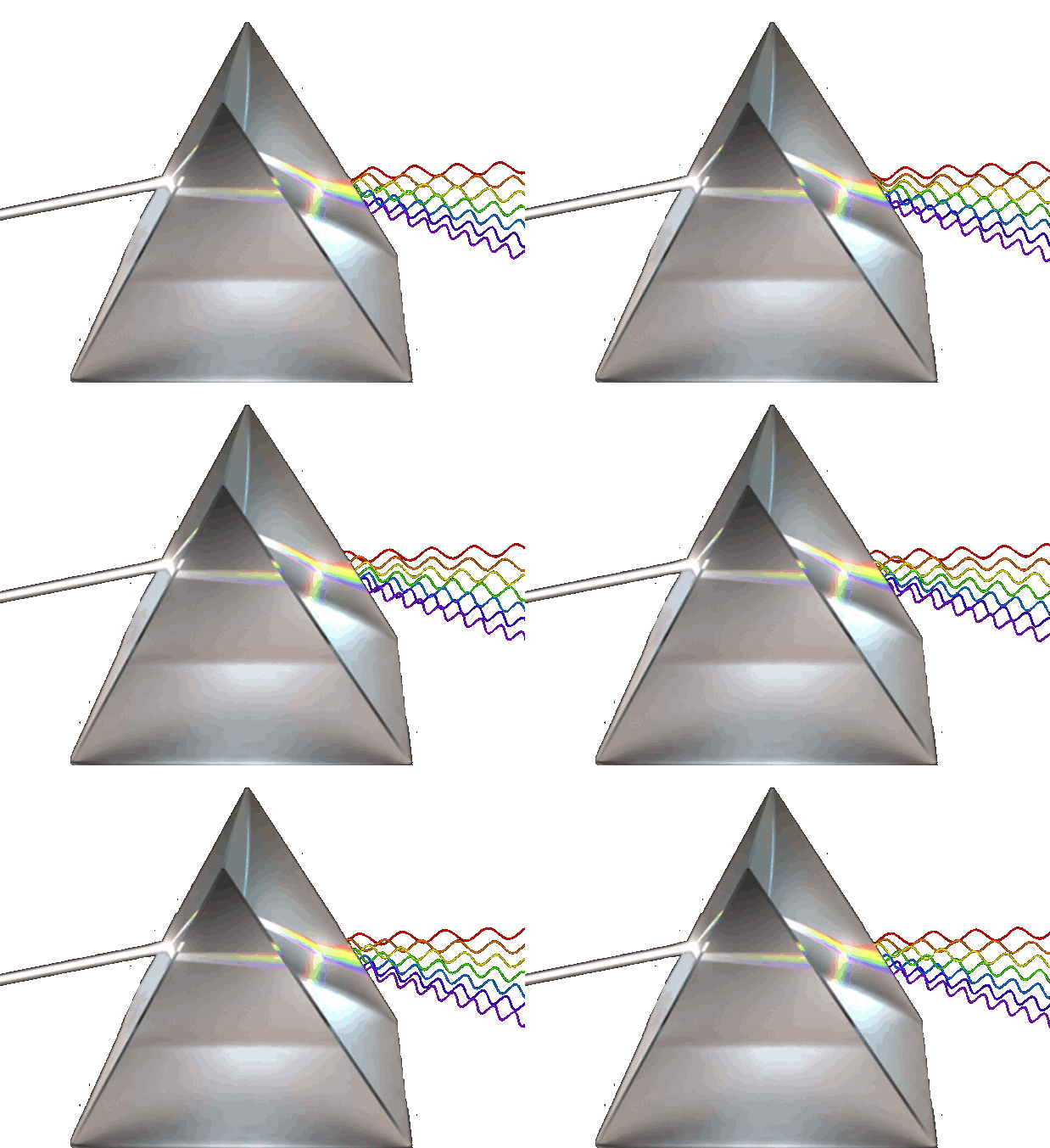
The spectrum
Sun spectrum.
Electro-incandescent spectrum.
Electro-luminescent spectrum.
“Do men gather grapes from thorns, or figs from thistles? ”
– Matthew 7:16
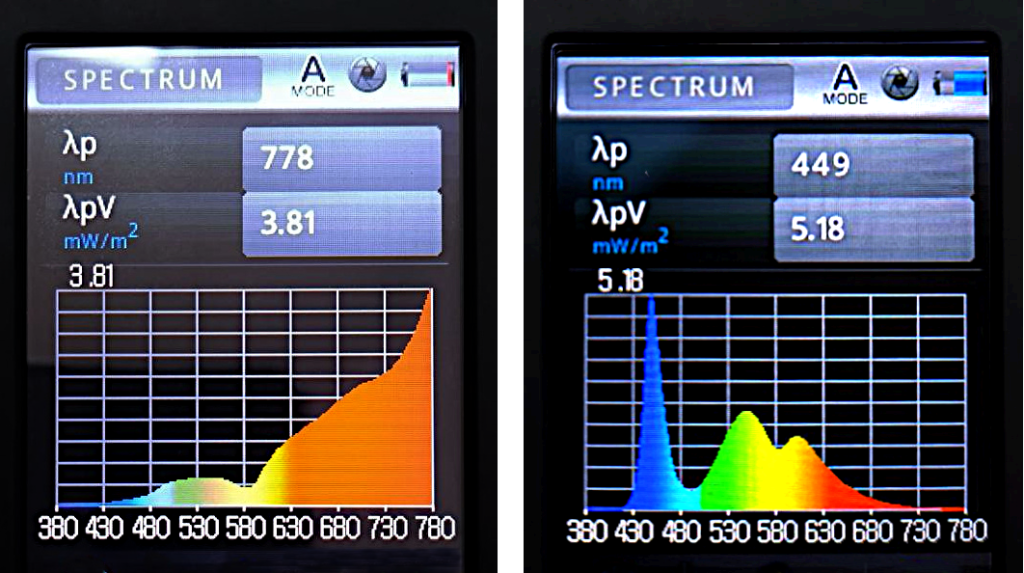
SpectrumView monitor white backlight and a phosphor based luminescent monitor white backlight digital spectrum.
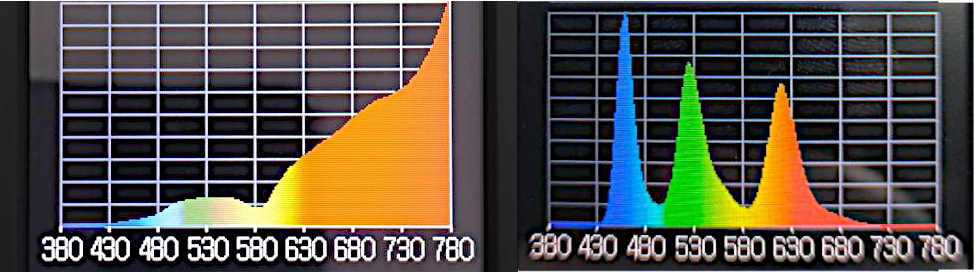
SpectrumView monitor white backlight and a RGB based luminescent monitor white backlight digital spectrum.
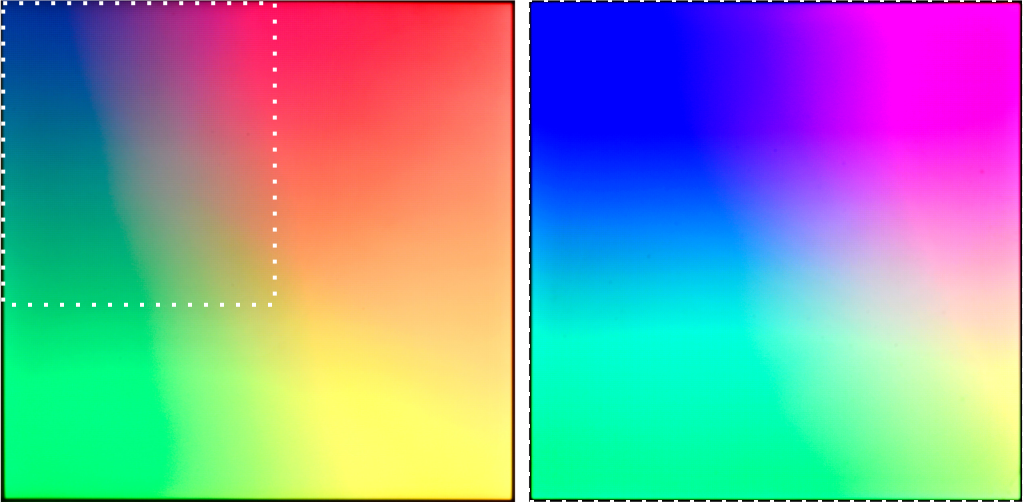
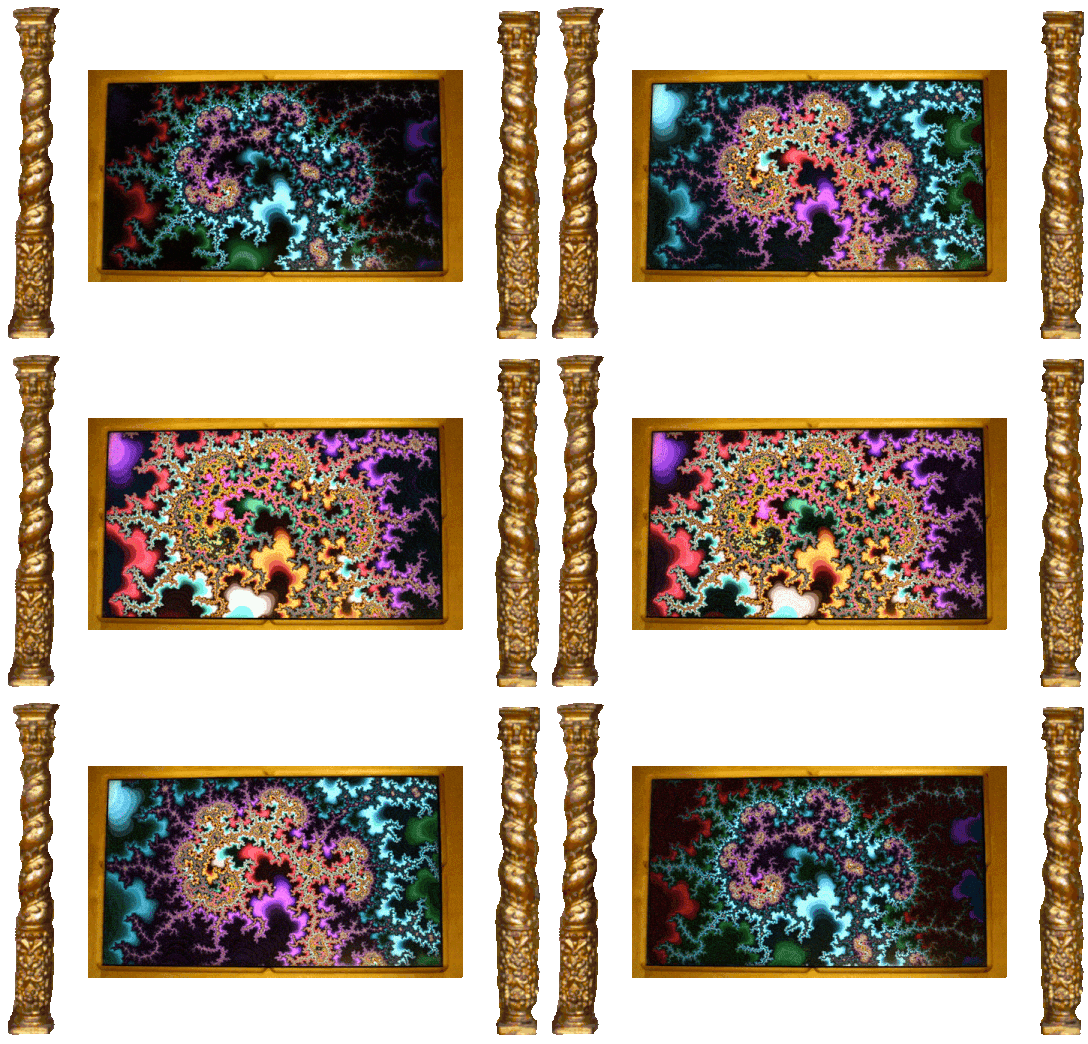
Observable color gamut of a SpectrumView monitor at 10k, 6k and 2.5k in camera white balance (first 3) and of a common luminescent monitor at 10k, 6k and 2.5k (last 3).
Total observable color gamut as seen from a SpectrumView incandescent monitor and a common luminescent monitor.
Observable color gamut of a SpectrumView monitor at 10k, 6k and 2.5k in camera white balance (first 3) and of a common luminescent monitor at 10k, 6k and 2.5k (last 3).
Observable color gamut between a SpectrumView monitor and common luminescent monitor at 6 Kelvin.
Observable color gamut between a SpectrumView monitor and common luminescent monitor at 6 Kelvin.
Observable color gamut between a SpectrumView monitor and common luminescent monitor at 6 Kelvin.
Entropy
“There is also light in darkness, and darkness in light.”
– Popular proverb
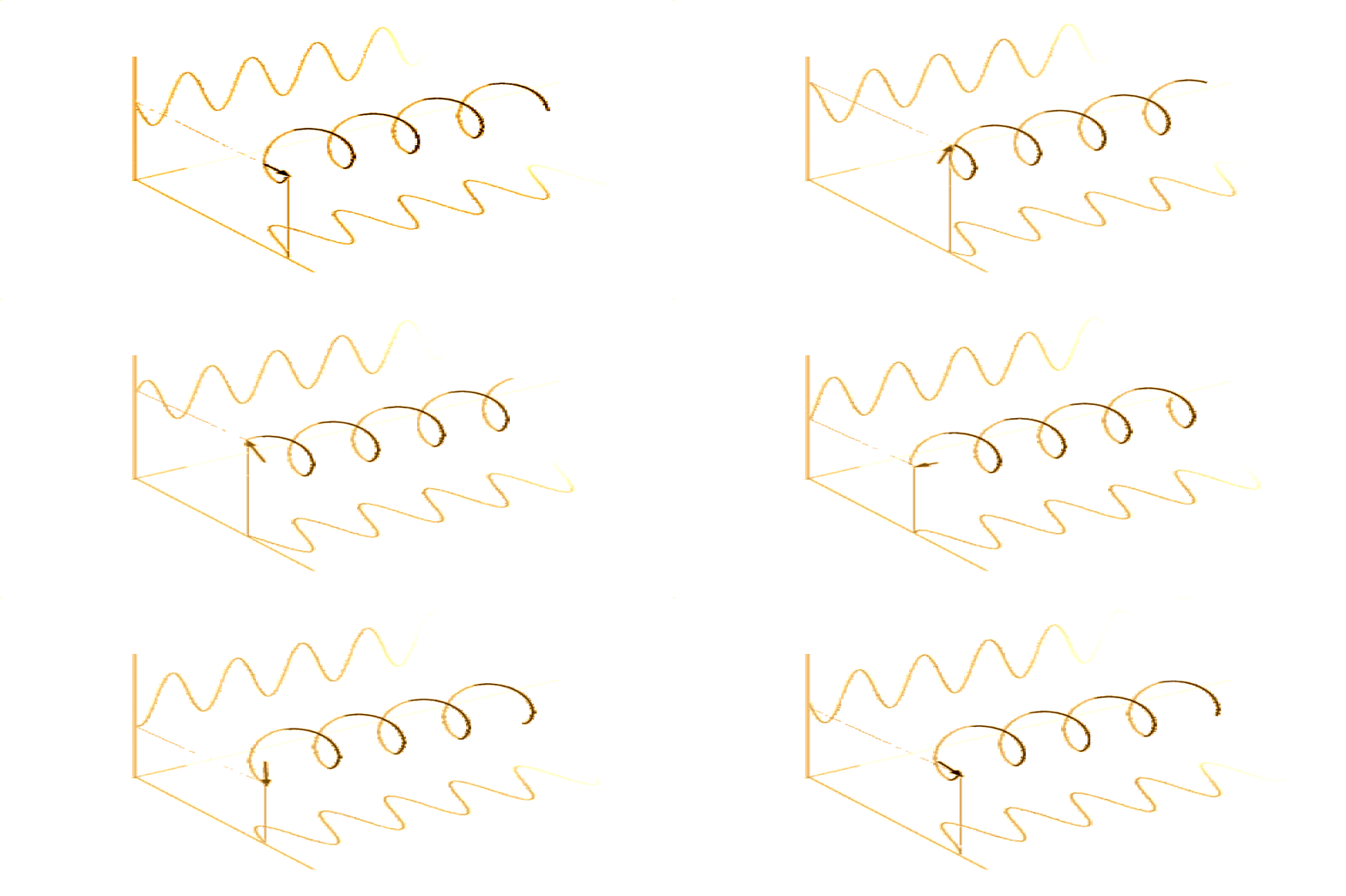
Entropy in light is measured by the amount of possibilities in its properties such as its phase, frequency, polarization and direction. Higher entropy corresponds to wider possibilities in its configurations, while lower entropy corresponds to less variations and more uniformity. Incandescence is a light that naturally gravitates towards high entropy, it spits out photons of every possible frequency, phase, direction, almost entirely at random, it is maximum entropy light. Luminescence towards low entropy, for example in lasers every photon is almost identical, same frequency, phase, direction, almost no variation, minimum novelty. But this is not bad. its the kind of light that carry internet signals via fiber optic cables, you cannot encode such signals via incandescence. So both kinds of light are extremely useful and have their unique applications in our modern world, technology and art.
“The sage travels all day over the land and sea,
but does not lose sight of Infinity.”
– The Tao Verse 26
Entropy is a fascinating property of our observable universe, it is the measure of unexpectedness in physical matter or an intangible signal. Entropy is a gradient and the universe is made of its two ends, and both are equally as important, two directions that tend toward complete opposites, yet one can exist inside the other. For example we need a heartbeat that beats a steady rhythm and barely surprises or does anything new, so the brain can do some of most novel unpredictable surprising things in the universe. Entropy is often defined negatively as disorder, but this definition is biased in defining what entropy really is in a universal sense, also order is subjective as one man’s disorder can be another man’s order. This common definition of entropy as disorder was devised during the industrial revolution by a mindset that gave more value to predictability and uniformity than to novelty, and thus saw entropy negatively. The authors, Boltzmann and Clausius were not observing the universe from a neutral point of view, and decided the highest good was predictability, standardization, with no surprises, and no deviation, very industrial. However this 170 year old way of defining entropy is not only outdated but short sighted, because in a universal sense, order is not the opposite of entropy, predictability is.
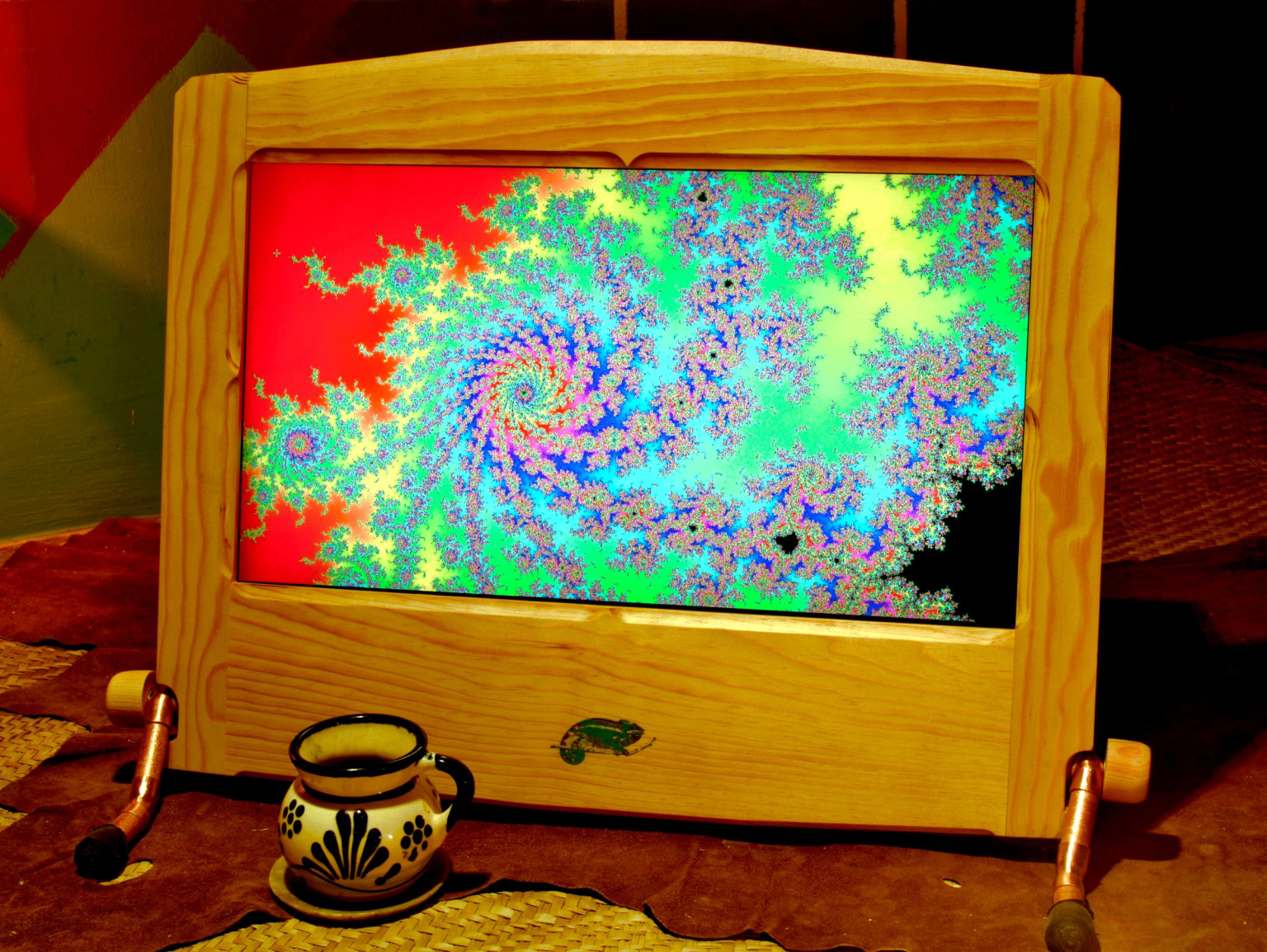
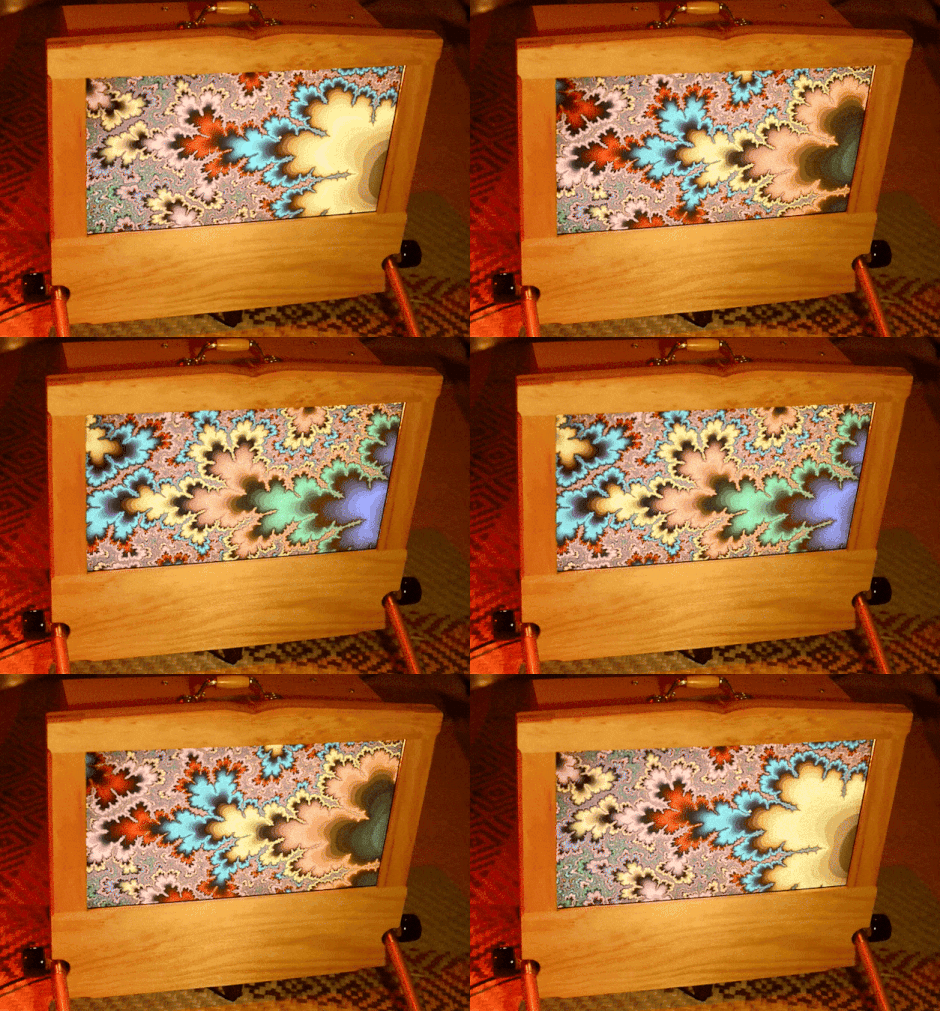
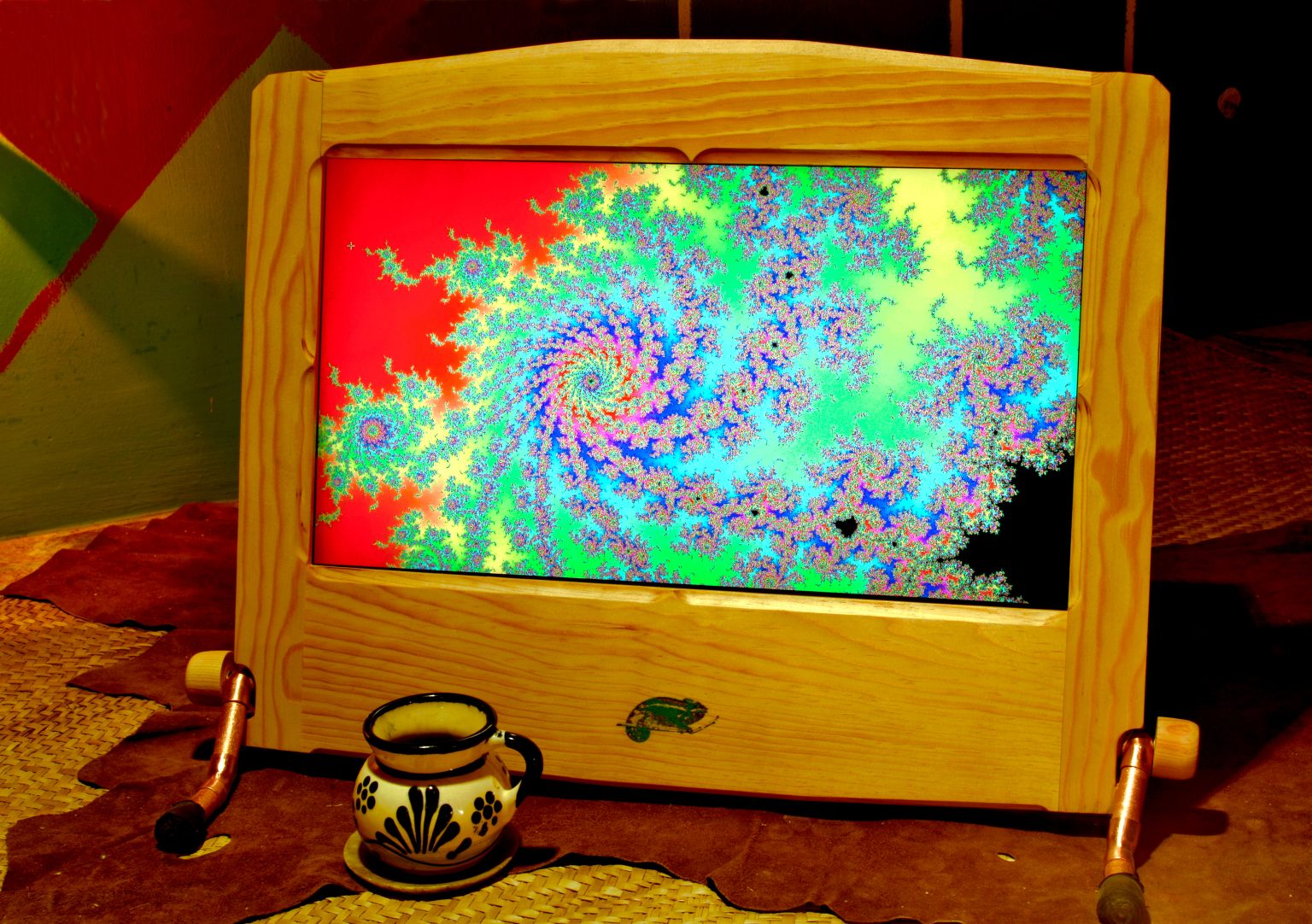
For example, take an inhabited house and an abandoned one, the inhabited looks far more ordered than the abandoned, but paradoxically the inhabited has higher entropy as it has more unexpected events happening constantly. And the abandoned one, has far fewer unexpected events happening constantly, almost every thing that will ever happen to that house is predictable, it has one single ending, and it is just slowly walking towards it. That is low entropy, that is almost zero novelty. If the amount of disorder is what defines entropy, then the abandoned house should appear more ordered than the inhabited one, but this is not so. But novelty can exist in both ordered and disordered configurations, as long as they are unpredictable, and so the inhabited house can have higher novelty than the uninhabited, while still being more ordered. A mathematical proof of novelty and order in the same place can be found in the theLorenzattractor and the Mandelbrot set. The Mandelbrot set (zn+1=zn2+c) follows only one rule, so it is a very rigidly ordered thing, it is the ultimate low-entropy platform, yet you can zoom into it or all eternity and you will never see the same shape twice as its iterate across time, it generates infinite never-repeating novelty. In other words, it is maximum order and maximum entropy without any contradiction, it could very well be the shape of time itself, as time is mercilessly rigid, and yet, what that very rigid thing also mandates a universe that produce endless novelty. Like a rigid train track that has no end, and goes through landscapes that no one has ever quite seen before.
Incandescent light emitters can generate some of the highest photonic entropy and incoherence in the universe, meaning this light has very broad degrees of freedom and novelty in its variations. Very useful for certain things but not for others.
“The Disintegration of the Persistence of Memory.” Salvador Dali, 1954.
Luminescent light emitters can generate some of the lowest photonic entropy and highest coherence in the universe, meaning this light has little variations and very uniform. Very useful for certain things but not for others.
No study of light can be complete without mentioning the incredibly enigmatic relationship between light and time, which has been explored through the ages, most recently by Einstein, Wheeler and Feynman. Phenomenologically speaking, time is counted as novelty, not by a clock ticking separately from experience, but rather the information density of what consciousness actually registers. For example for a child almost everything is new, every single day is maximum entropy, so time stretches so wide. Then one gets older, one learn the patterns, stops being surprised, therefore entropy drops, you blink and years have gone by. In light, low-entropy photons are called coherent because they are predictable and the photons are repetitive and uniform, this is very useful for machines and computing, but for Human consciousness, it means it doesn’t engage with novelty, therefore time shrinks. But high-entropy photons such as from fire, are called incoherent photons because are genuinely unpredictable, not useful for machines and computing, but for Human eyes and consciousness, it means the brain is constantly encountering novelty, there is more to perceive, so time expands.
State-of-the-art SpectrumView users can experience a form of analog time dilation, thanks to its high-entropy incoherent light.
State of the art computing can have a form of digital time dilation, thanks to its ultra low-entropy coherent light.
Analog signals are naturally high in entropy, while digital signals are synthesized steps, both have their unique and very useful applications.
Photomodulation
Photomodulation is the ability for cells to regenerate through invisible infrared light, reducing ocular inflammation, alleviating photosensitivity, improving blood circulation and cognition. Infrared frequencies penetrate beyond the surface of the skin into the body, SpectrumView monitors emit a broad range of broadband infrared light thanks to its incandescent nature.
“Penetrating red light is possibly the fundamental anti-stress factor for all organisms.”
– Ray Peat
Applications
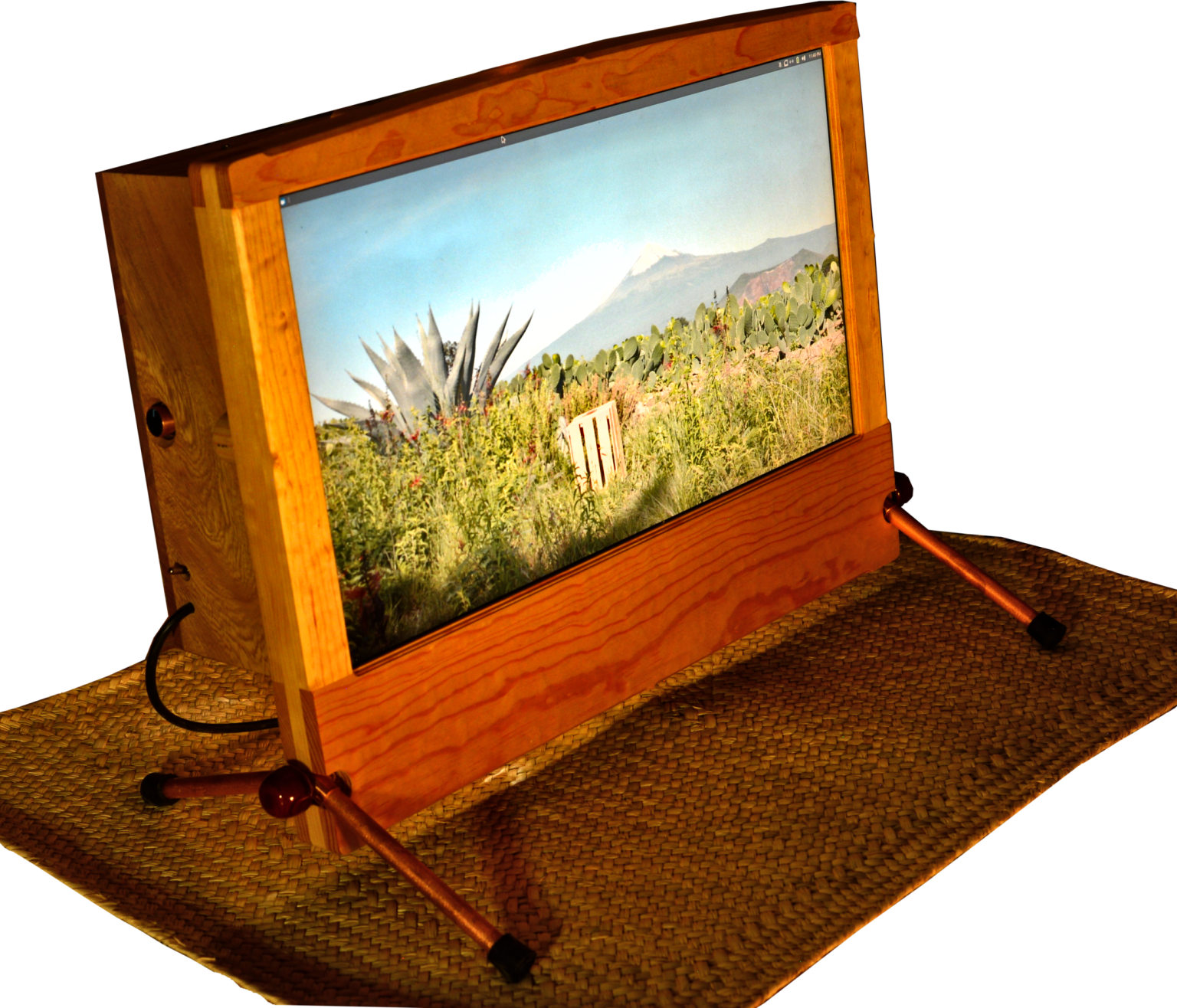
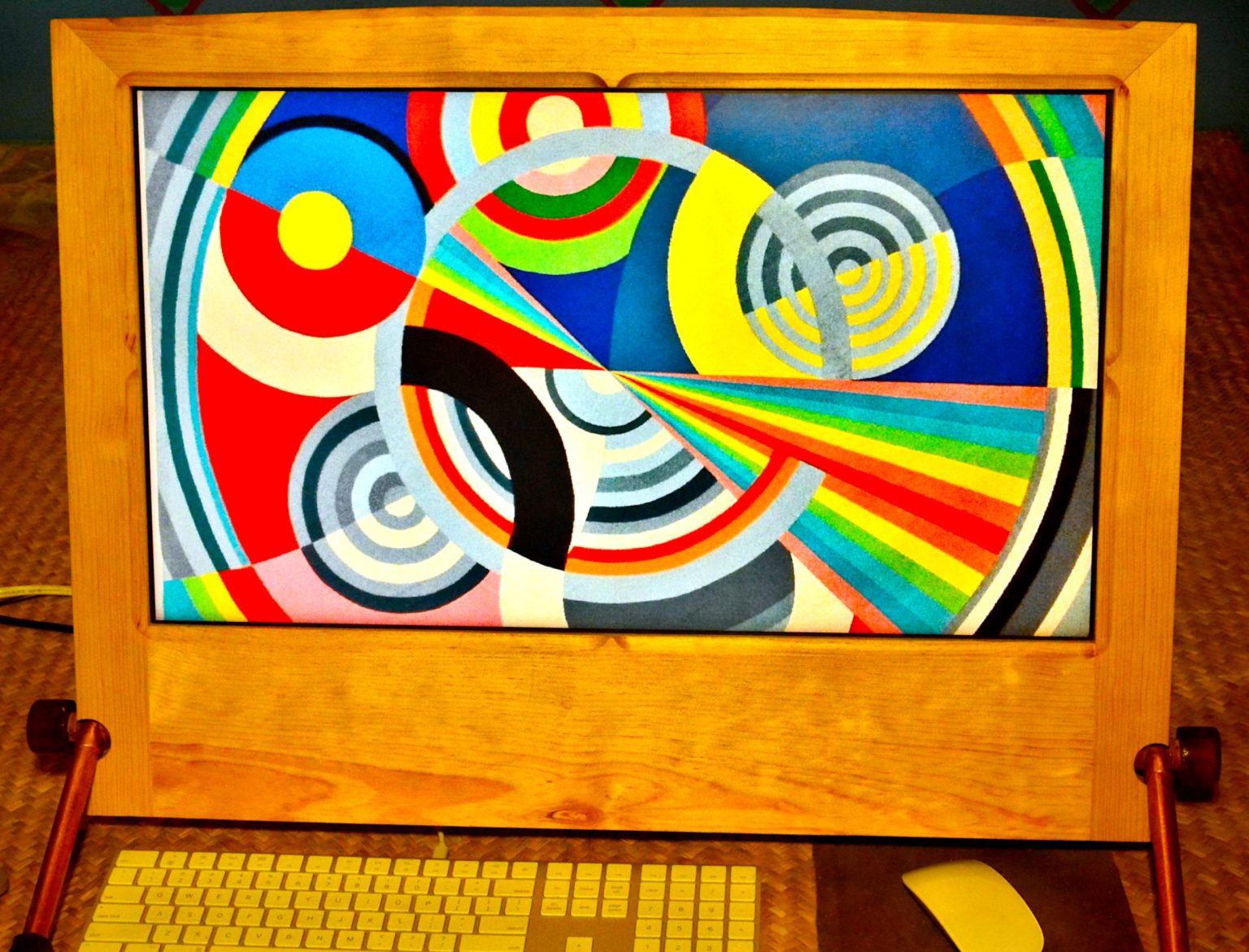
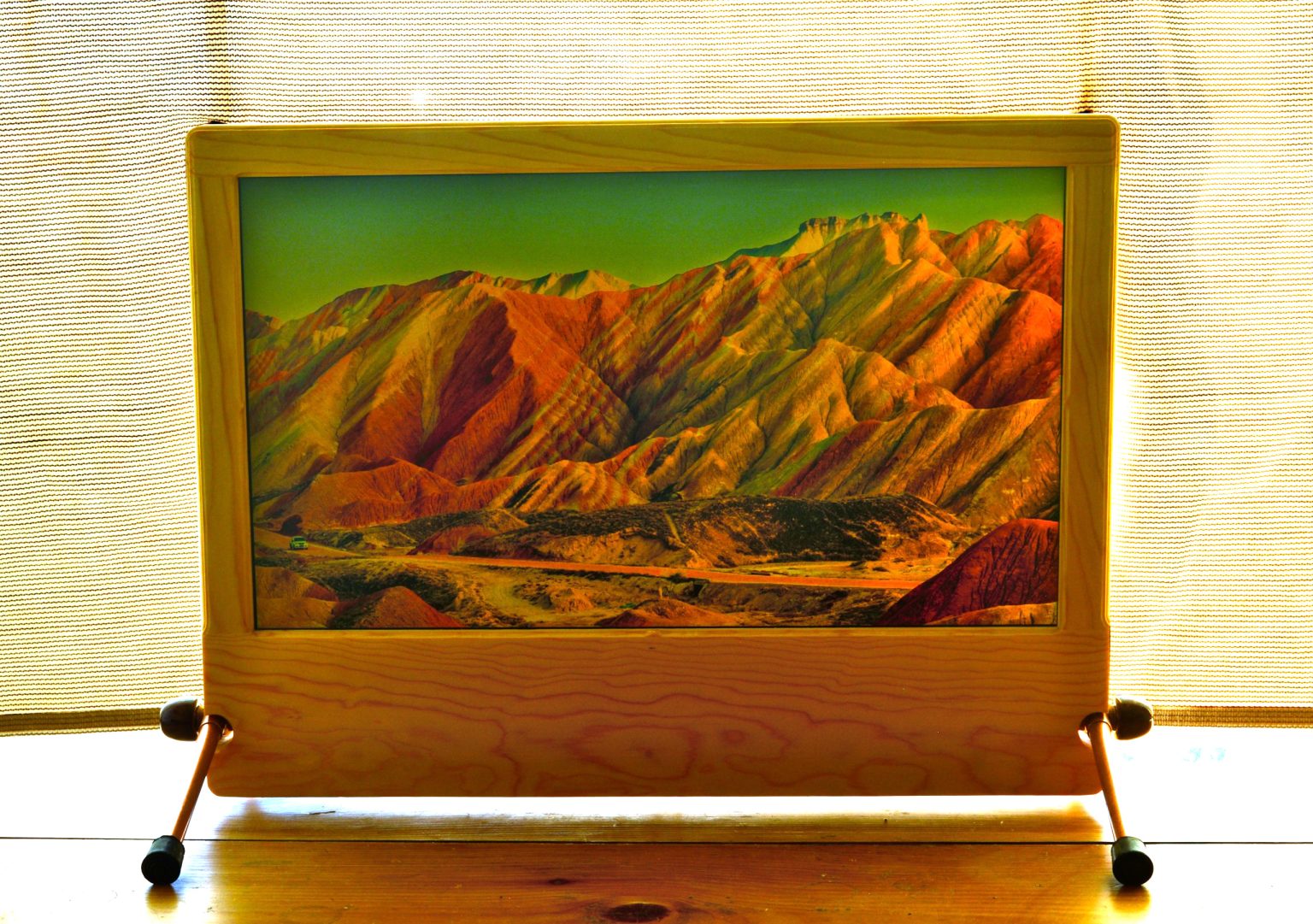
The ideal monitor for artistic creation, featuring the the ideal color reference of color rendering at 100 CRI and suitable for extended long confortable working sessions. (27″ present model)
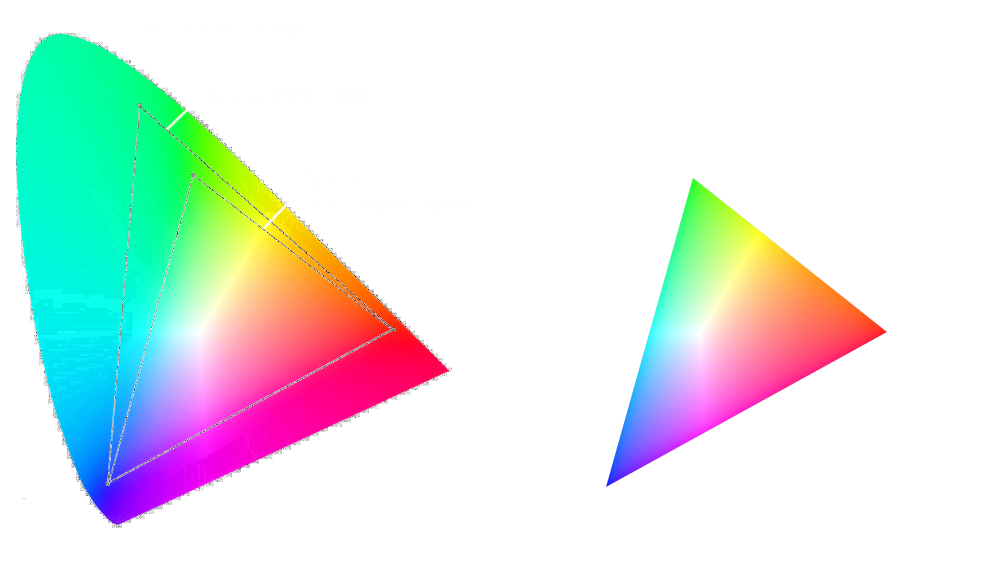
The inner triangles represents the frequencies a common luminescent monitor can emit, the horseshoe shape is the visible colors that we can see and that a SpectumView monitor can emit.
“The question is not what you look at, but what you see.”
– Henry David Thoreau
Also ideal for night-time movie watching.
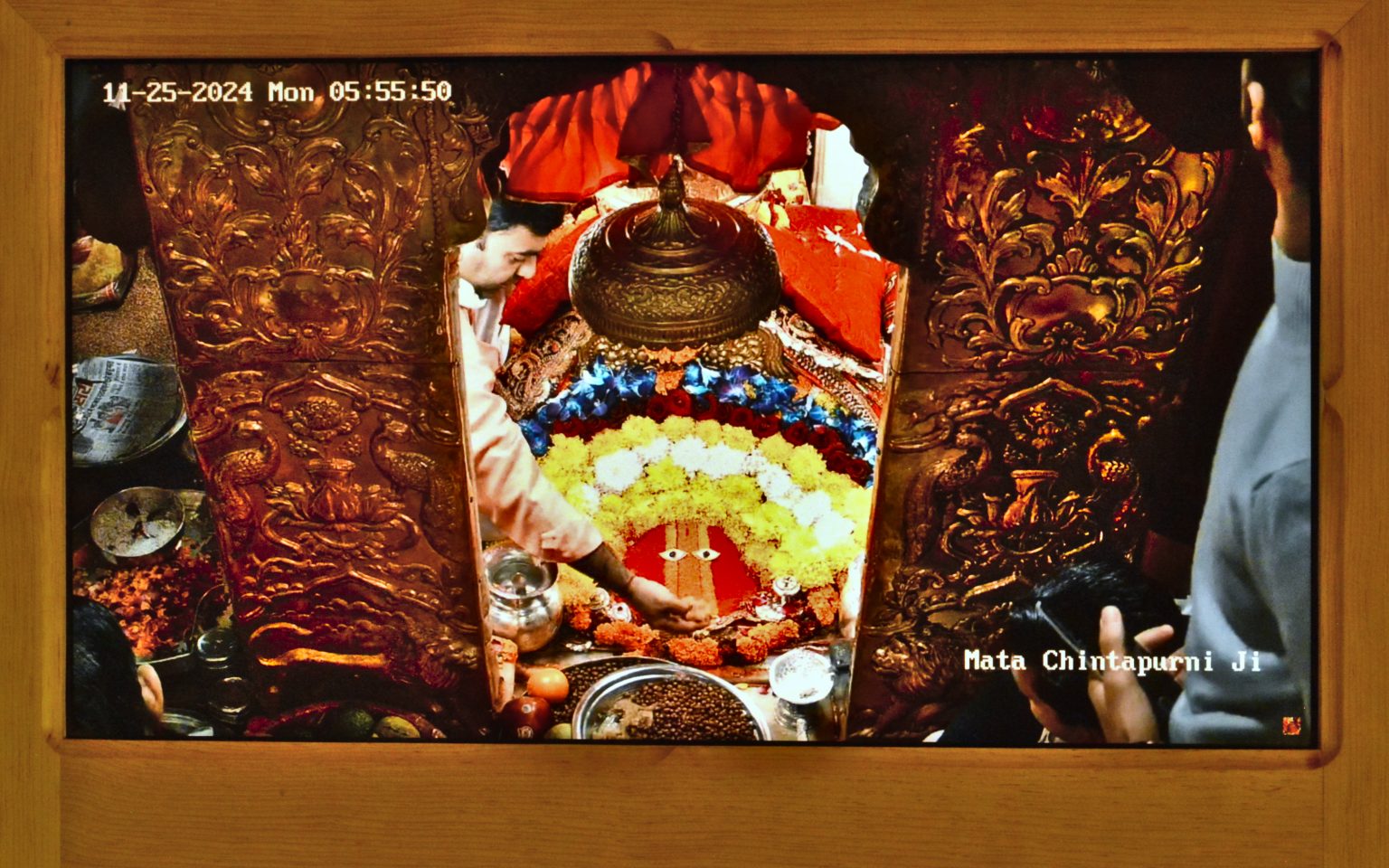
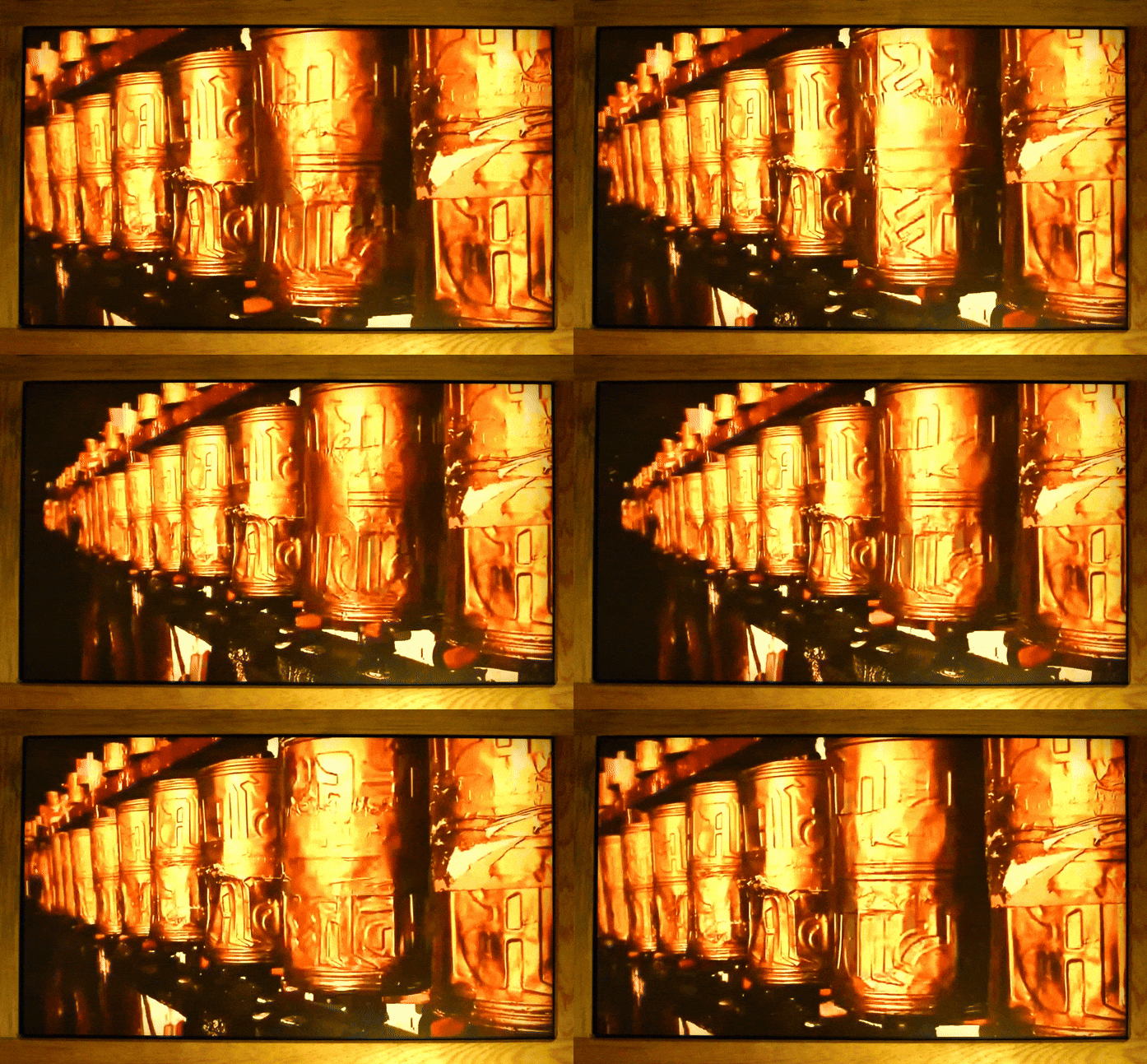
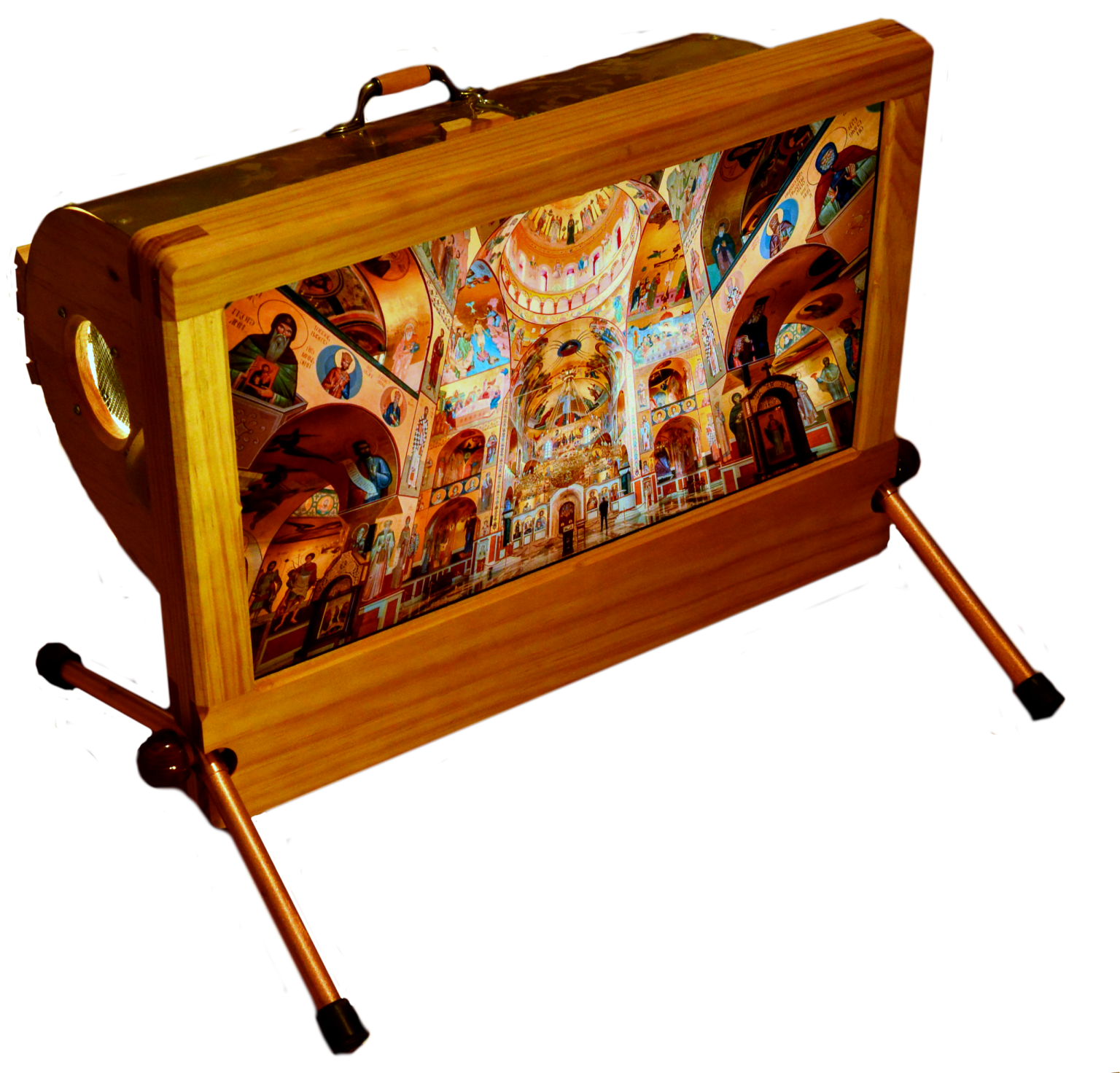
Also ideal for online darshan viewing.
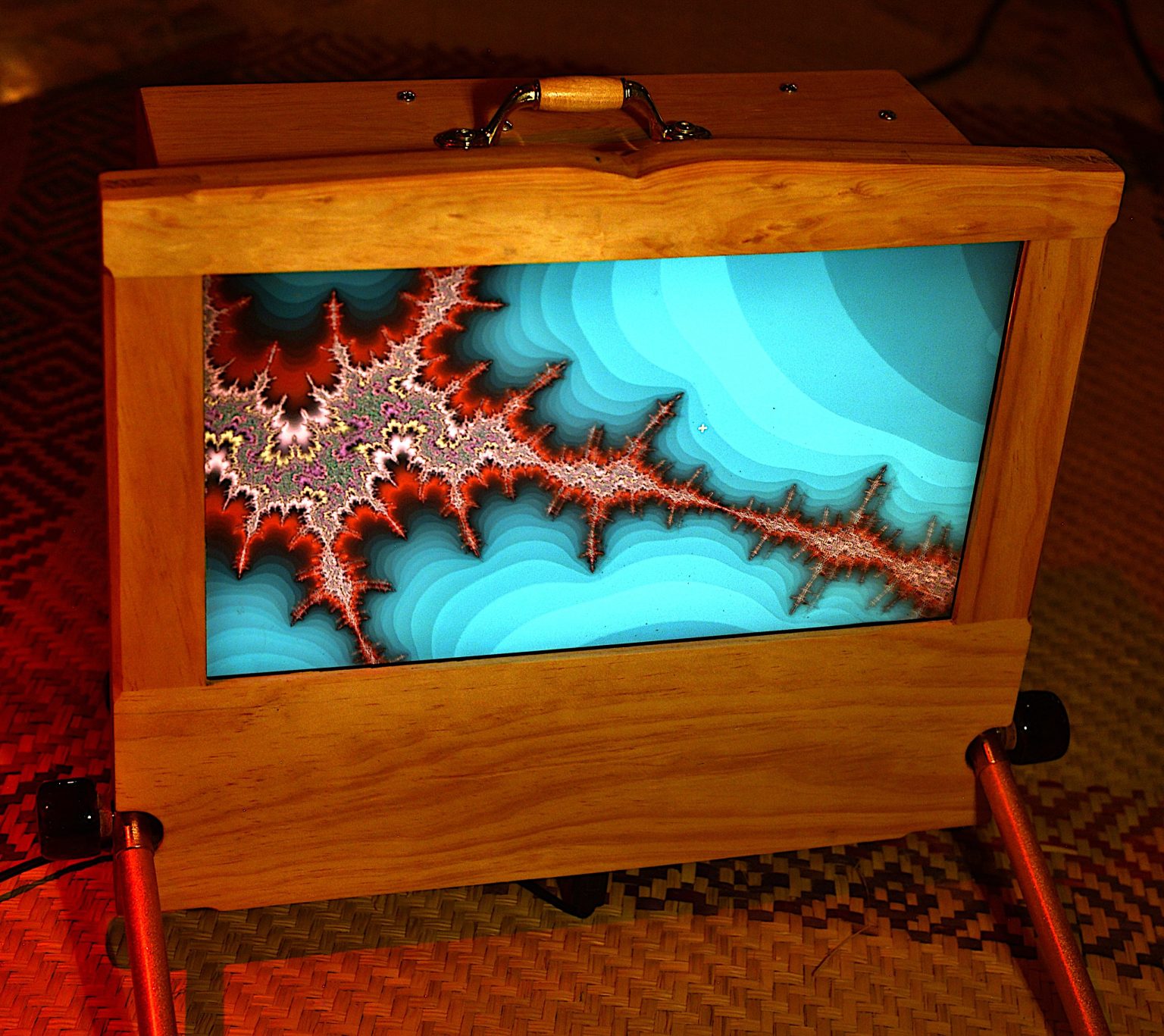
The ideal monitor for offline M. set explorations.
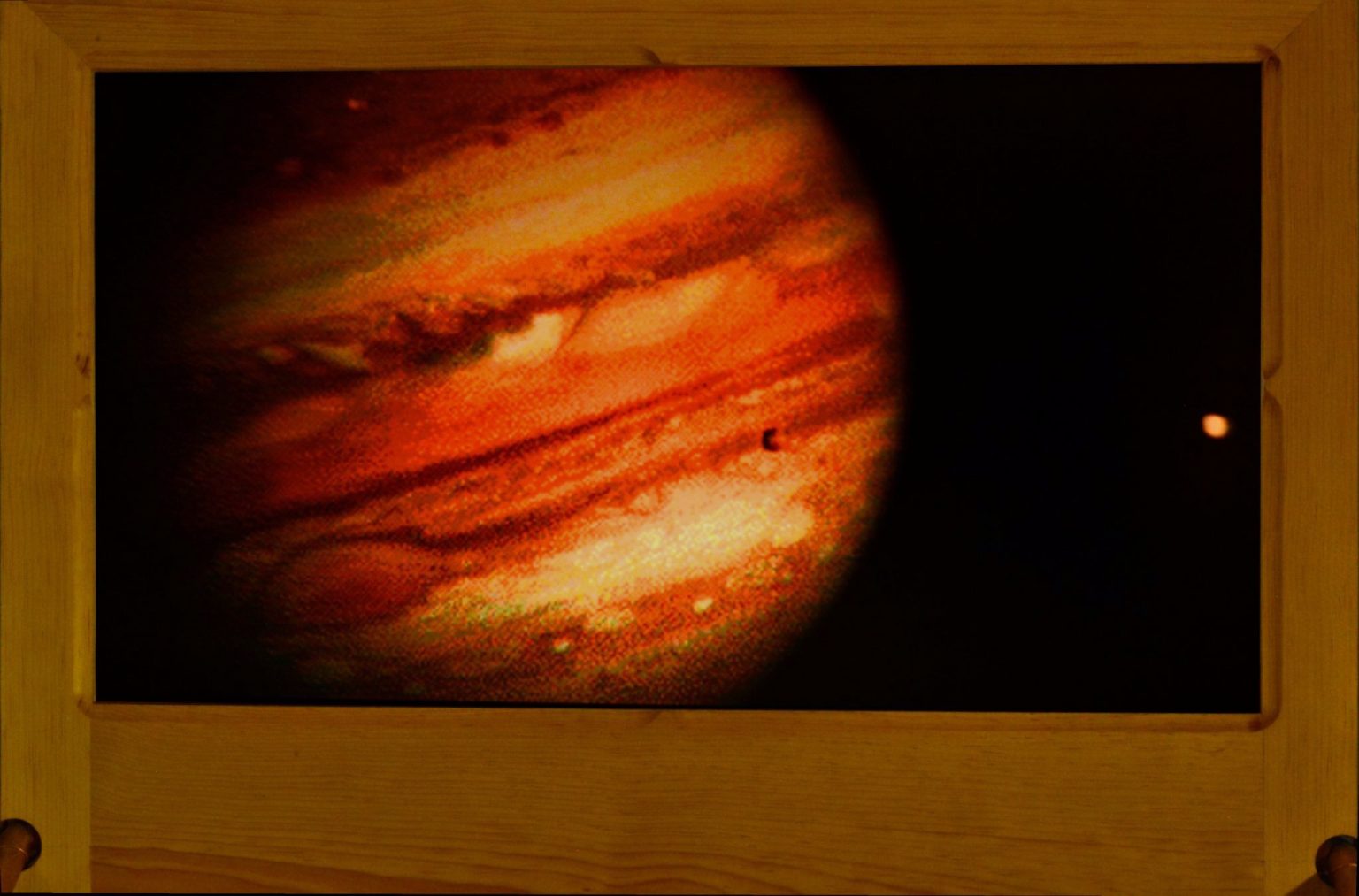
Also ideal for genuine photonic fidelity astrophotography viewing.
Inner workings
High photonic entropy.
Translucently illuminated pixels from behind like vitral glass.
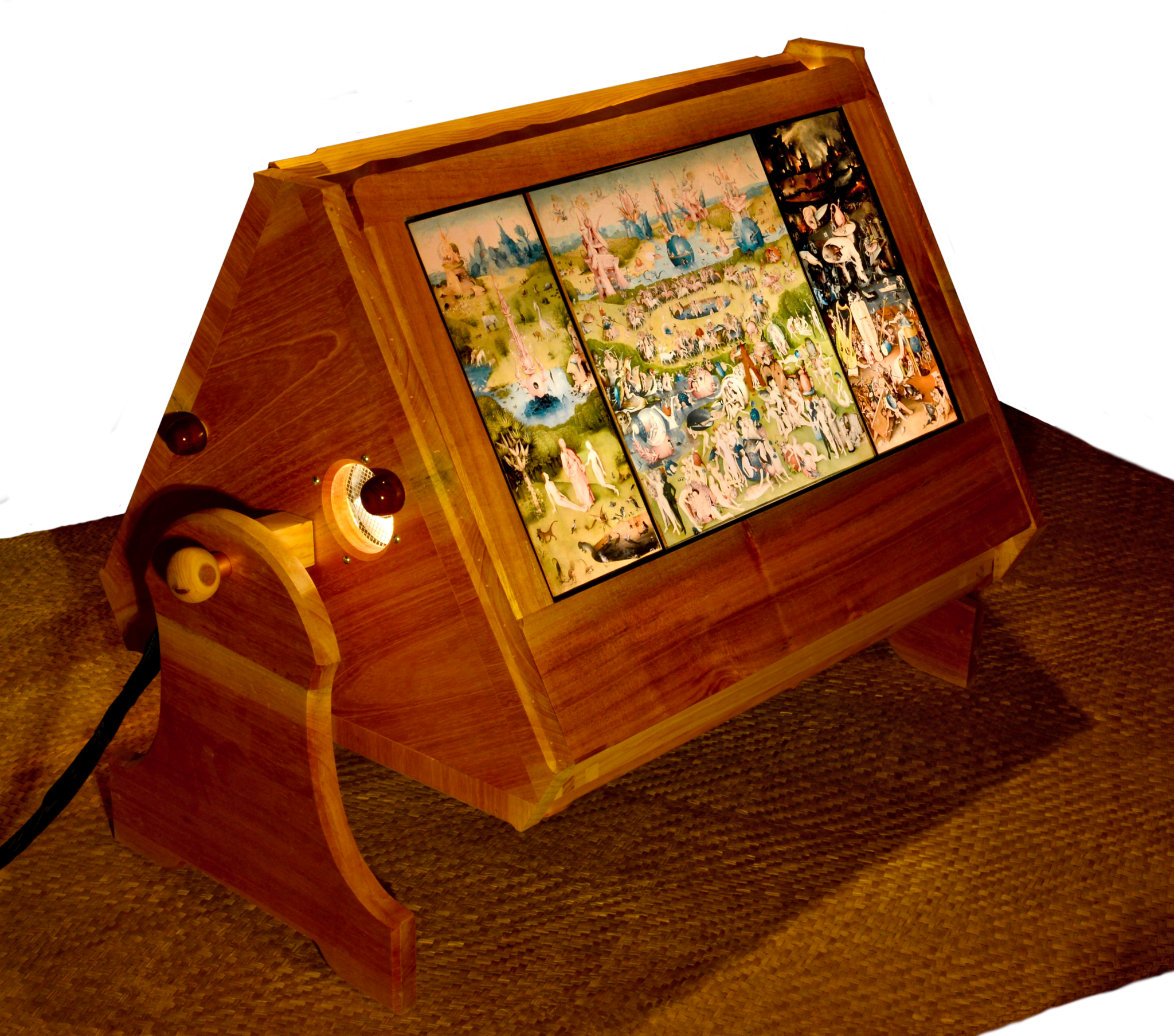
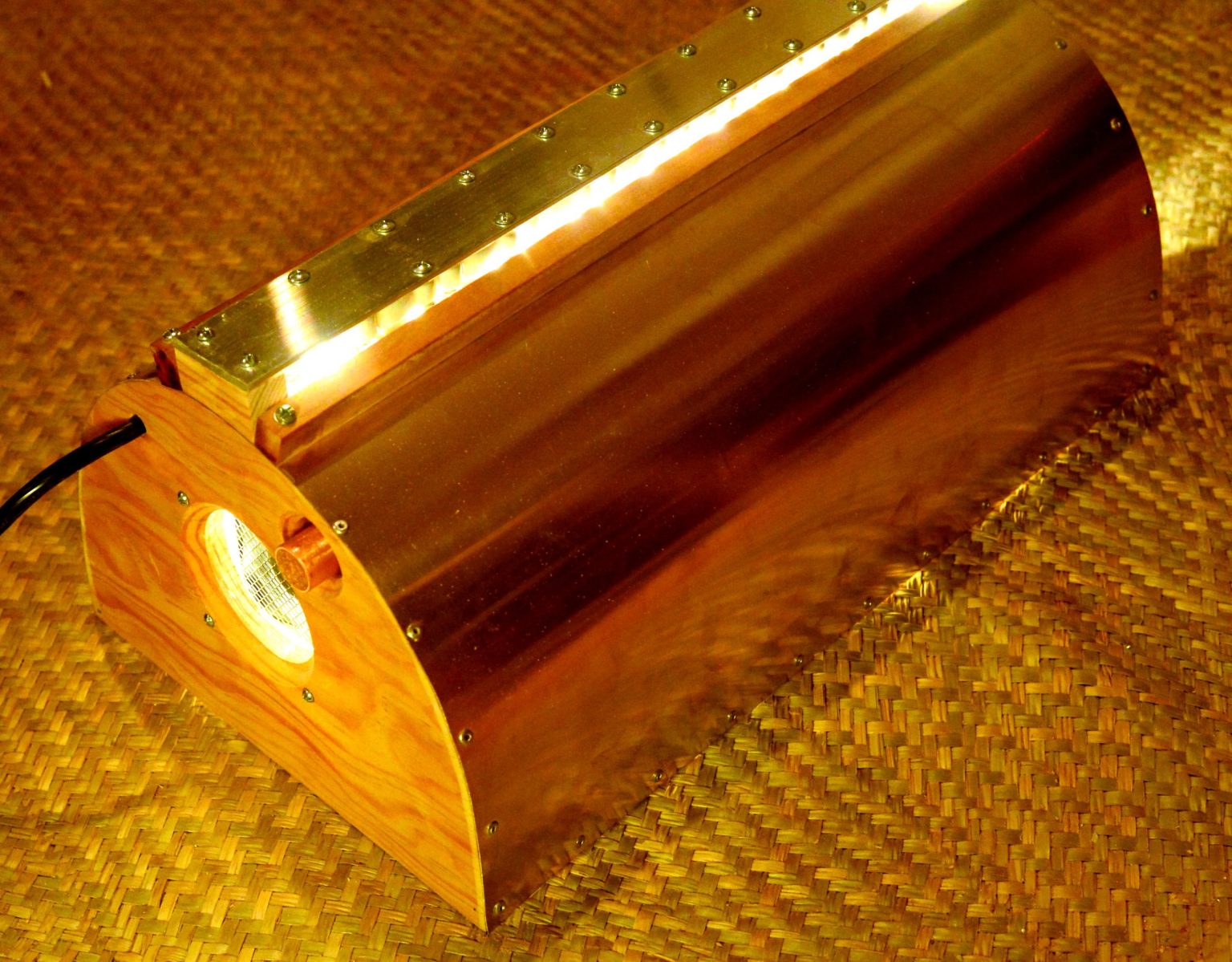
Long-lasting serviceable components, genuine brass reflecting heat-sinks and sophisticated airflow design, providing a genuinely golden retroillumination.
Models
SpectrumView Mini
Solar/electro-incandescent 15″ FullHD (1920×1080), 60Hz, HDMI, 178° viewing angle, VA panel, 8 bit per pixel, 120/240V, 4 x 25W light bulbs, Width 51cm, height 37cm, depth 40cm, weight 4.3Kg. Portable and lightweight, perfect for traveling.
SpectrumView 22
Solar/electro-incandescent 22″ FullHD (1920×1080), 100Hz, HDMI, VGA, 178° viewing angle, VA panel, 8 bit per pixel, 120/240V, 8 x 25W light bulbs, width 51cm, height 44cm, depth 40cm, weight 5.5Kg. Semi-portable and perfect for everyday usage.
SpectrumView Pro
Solar/electro-incandescent 27″, 2k model (2560 x 1440), 100Hz, 1ms response time, HDMI, VGA, DisplayPort, 178° viewing angle, VA panel, 8 bit per pixel (or 4k 60hz 10 bit IPS panel), external power supply, 120/240V, 10 x 25W light bulbs, width 75 cm height 54cm, depth 46cm, weight 9.4Kg. Excellent for power users.
SpectrumView Starlore
Starlore solar-specific 27″ 2k (2560 x 1440), 100Hz, 1ms response time, HDMI, VGA, DisplayPort, 178° viewing angle, VA panel, 8 bit per pixel, external power supply 120/240V. Width 75, height, 54 depth 40cm, weight 6.4Kg. Specially tailored for solar backlighting, ideal for spaces with ample daylight availability, has a day filter structure in the back to prevent front glare. Needs a window to place as close as possible with direct or indirect sunlight.
SpectrumView Master
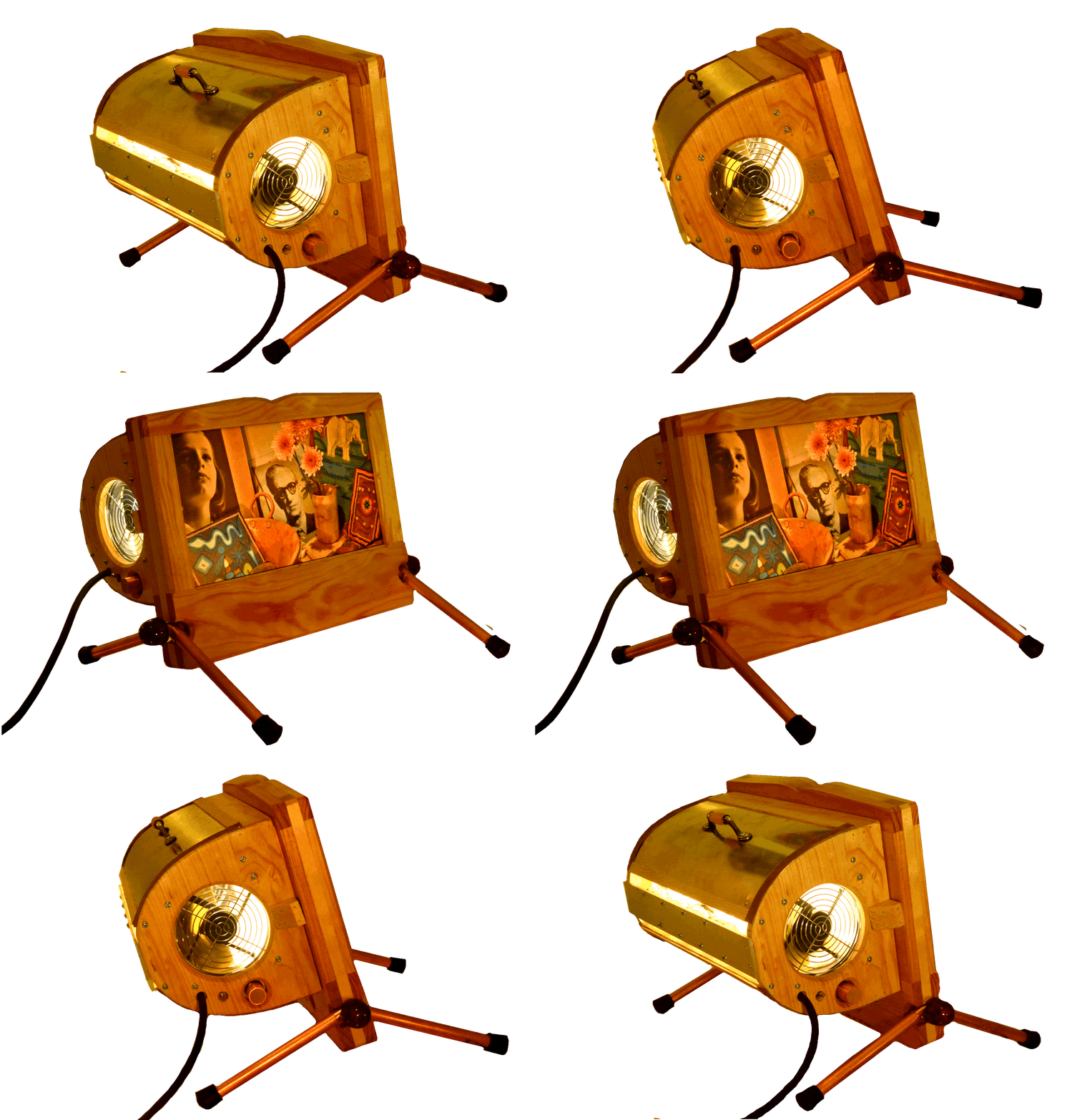
Sequential Tri-screen provides analog work spaces by physically rotating the monitor, ball bearings ensure an easy glide and adjustable viewing angle, gravity switch allows to turn off the screens not directly in front. 27″ 2k , (2560 x 1440), 100Hz, 1ms response time, HDMI, VGA, DisplayPort, 178° viewing angle, VA panel, 8 bit per pixel, external power supply, 120/240V, 10 x 25W light bulbs, width 75cm, height 100cm, depth 66cm, weight 24Kg. Excellent for power users that require multiple workspaces.
Order
To order click the Pay with BTC button.
Visit our US Friend website to pay in other methods.
🕰️ There is a ≈5 week wait after placing order before shipping, monitors are handmade in a first come first served basis, patience is humbly requested.
📦 First-class express shipping with tracking number and safe arrival guaranteed, small import fees may or may not have to be payed, (probably not for US/Canada).
⚙️ Proper functioning is promised for 3 years in physical parts, any monetary refunds before shipping when paying with BTC will be at USD equivalent at time of transaction.
🦚 For customizations such as cardioid pediment, hand carved frame, mother of pearl incrustations, etc… Contact.
🌵 Use at your own risk, for experimental purposes only.
🌺 Shipped from Old Mexico.
Technical Specifications
Beewax polished varnished wood body.
Strong detachable copper mounts with very thick frame and Japanese style precision woodwork.
SpectrumView monitors are built to last and for long usage sessions, quality repairable components and wood, sophisticated airflow design, genuine brass heat-sinks, low-speed fans, substantial EMF shielding, and strong copper legs. The bulbs used are standard Edison E27 base, of the approved size and wattage for household appliances such as ovens and fridges. For Europe and other 240v countries, an inner 120/240 switch is included so you can use 120v bulbs in a 240v country, twice as many replacement bulbs are included, which should last for many years.
SpectrumView Pro ports.
SpectrumView 22 ports.
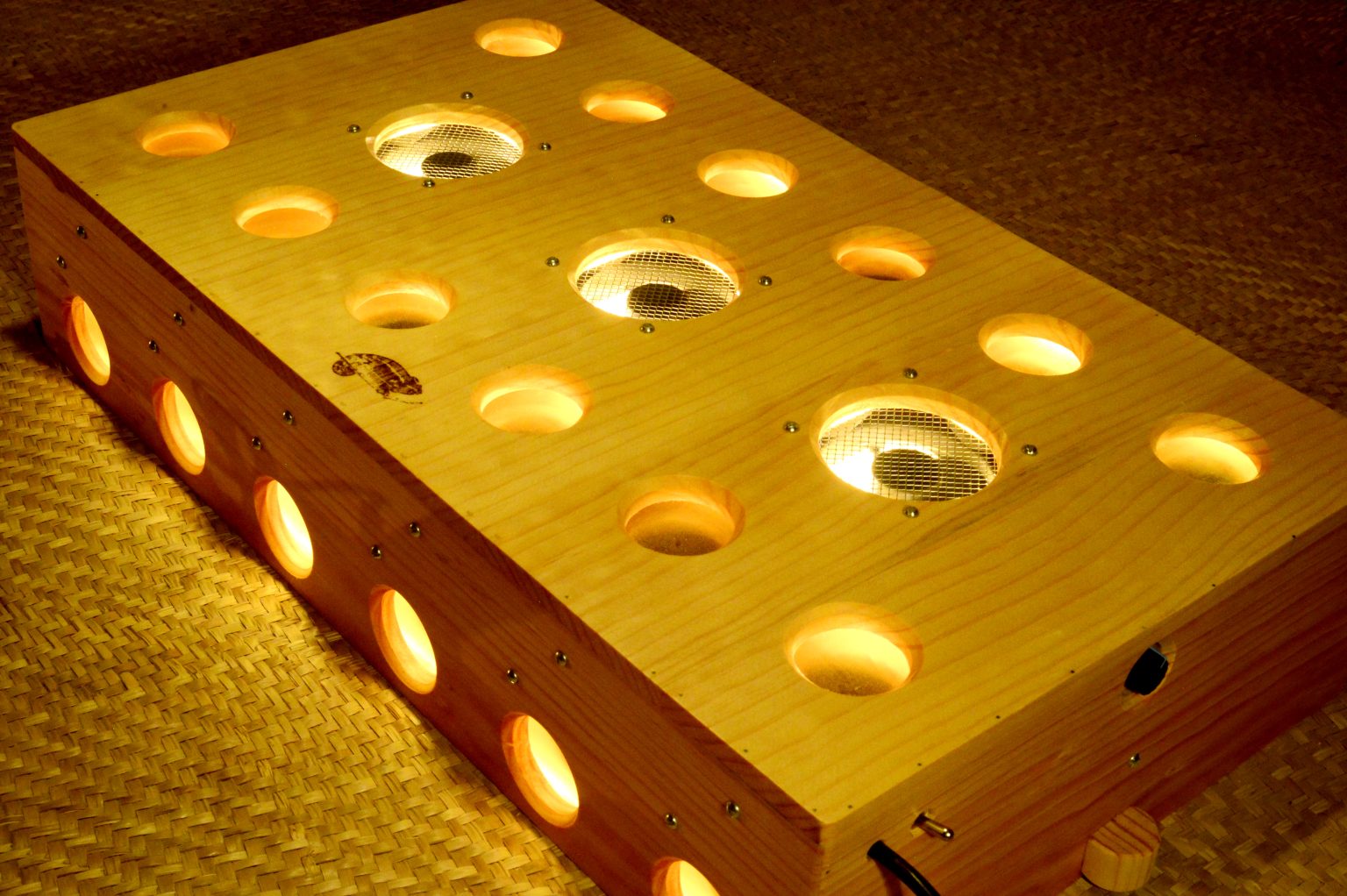
Dymaxion lightbox is a new version and it is brighter, quieter and cooler, new orders will be made in this version.
Legacy lightbox version is the original version.
SpectrumView Mini with cardioid pediment.
Keep in mind that using only electro-incandescence at full intensity for the whole day will increase your electric usage, and so is recommended it to also day backlight it during the day when setup and nature permits, so the electricity consumption when using it after sunset will be compensated. Also, if used during winter the equivalent thermal energy radiated will be subtracted from your heating costs. Frontier research in nanophotonics and thermophotovoltaics will make incandescent screens more widely available in the future. ⁴
“We are the architects of the future, not its victims.”